The Moment
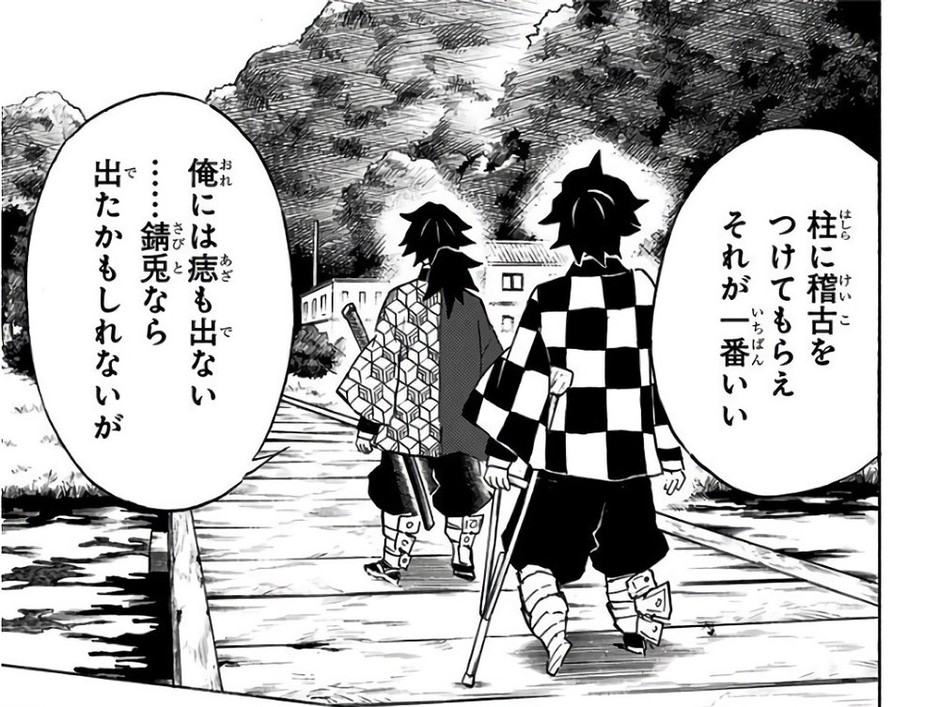
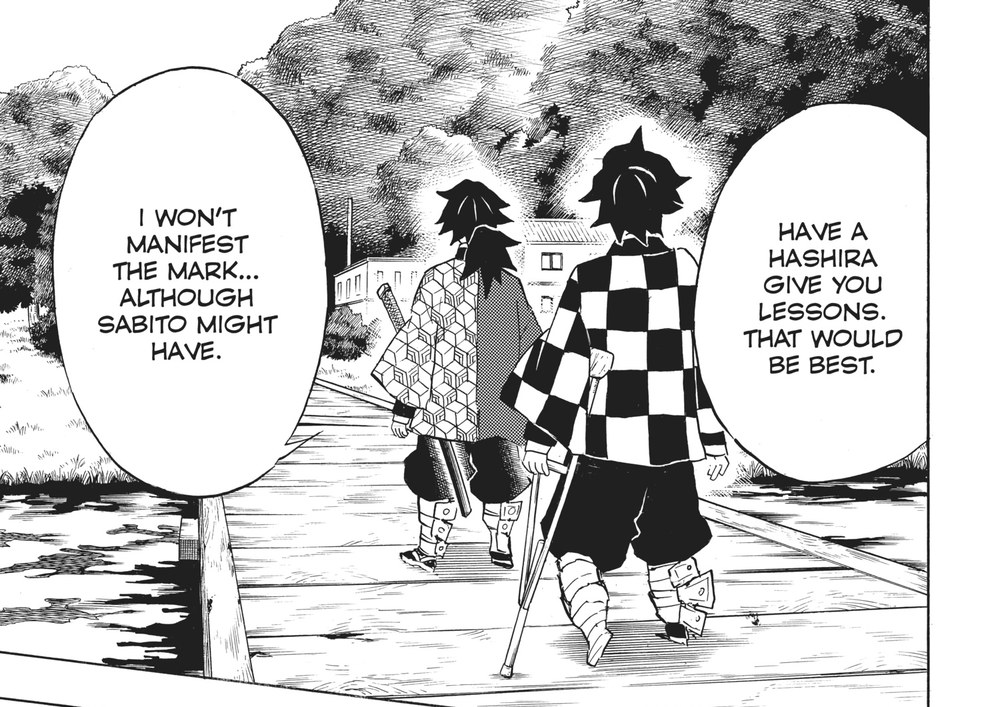
Vol.15, page 127. Giyu tells Tanjiro to go train with an actual Hashira instead of wasting time on him, and adds one more item to the list of reasons why: "I WON'T MANIFEST THE MARK... ALTHOUGH SABITO MIGHT HAVE."
Measuring Himself Against the Dead
What sets this line apart from ordinary self-deprecation is who Giyu compares himself to. He doesn't say he's weaker than the current Hashira, or slower than Tanjiro will become — he assigns his own missing potential to a specific person who is no longer alive to claim it. Sabito died in the Final Selection that Giyu survived; this comment is the clearest evidence, anywhere in the confession that surrounds it, of what that survival actually costs him day to day. He isn't comparing himself to a rival. He's handing his body's own proof of worth to a ghost, as though the Mark had been addressed to the wrong person and delivered to him by mistake.
What This Confession Is Doing
This line sits inside the same conversation where Giyu also refuses the title of Water Hashira and insists he has no real place in the Corps — and the Mark comment is the most physical of the three refusals. Rank can be argued about; belonging is a matter of opinion; but "my own flesh won't even do this" reads, in Giyu's flat delivery, as a fact beyond appeal. He states it exactly the way he states everything else — no self-pity, just an audit — and that flatness is what makes it land as grief rather than complaint. He isn't asking Tanjiro for reassurance. He's reporting a result.
Why the Scene Matters
Everything readers eventually learn about Giyu's connection to Sabito and Final Selection gives this offhand, half-turned-away comment retroactive weight: a man who has spent years quietly deciding that a dead friend deserved his life more than he does, saying so out loud, in the middle of a completely different conversation, as though it were background information rather than the center of who he is. It is a rare moment where the story lets a supporting character's entire private grief surface in a single aside, without ever stopping to explain it.
Further Reading
How 痣 — an everyday word for a bruise or birthmark — became "the Mark," a proper-noun sign of a slayer's transcendence, and what English's capital letters do that Japanese can't, is covered in the sibling Gem: THE MARK: A Capital Letter Does What Japanese Can't.