Translation Pitfall · Kyojuro Rengoku
Why 'My Bright Red Flame Blade' Loses 煉獄's Archaic Hellfire Power
VIZ's 'Bright Red Flame Blade' captures the literal image but strips away the archaic tone of 赫き (archaic form of 'red') and misses the wordplay where Rengoku's name—煉獄, literally 'purgatory/hell-forge'—layers spiritual weight onto the weapon itself.

Japanese (manga)
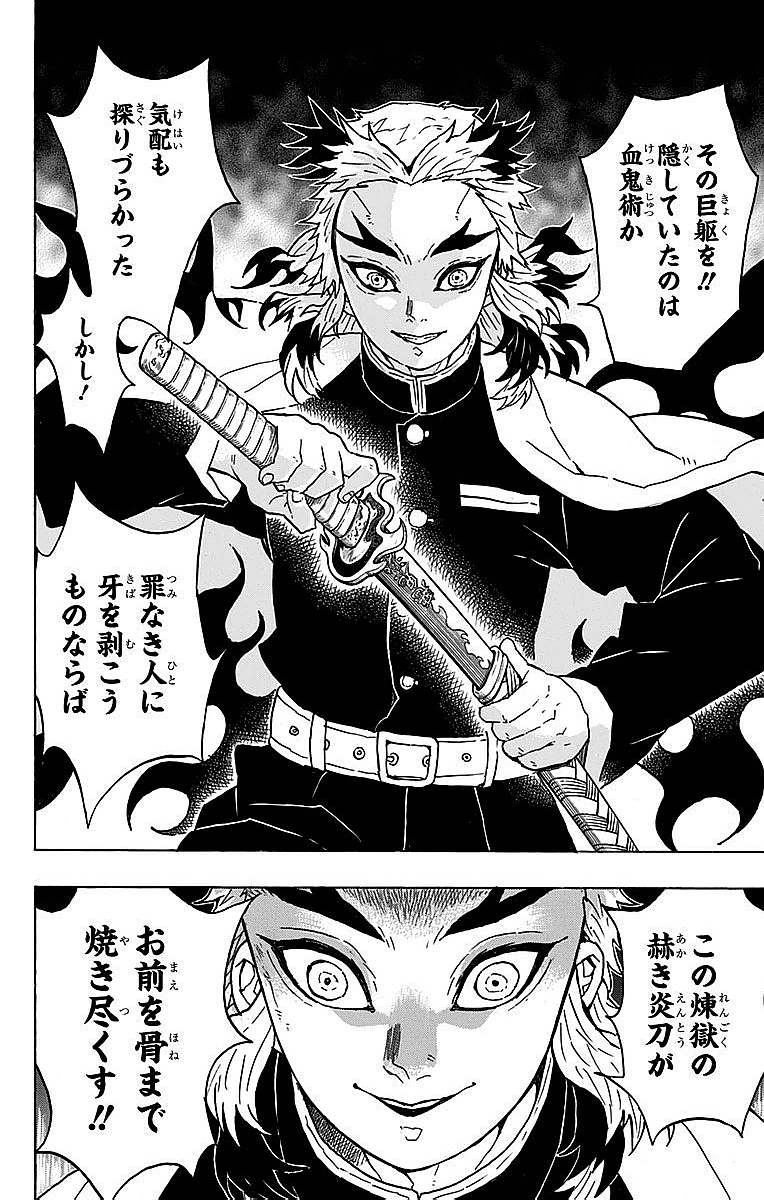
鬼滅の刃 第7巻 p.42 ©吾峠呼世晴/集英社
English (VIZ official)
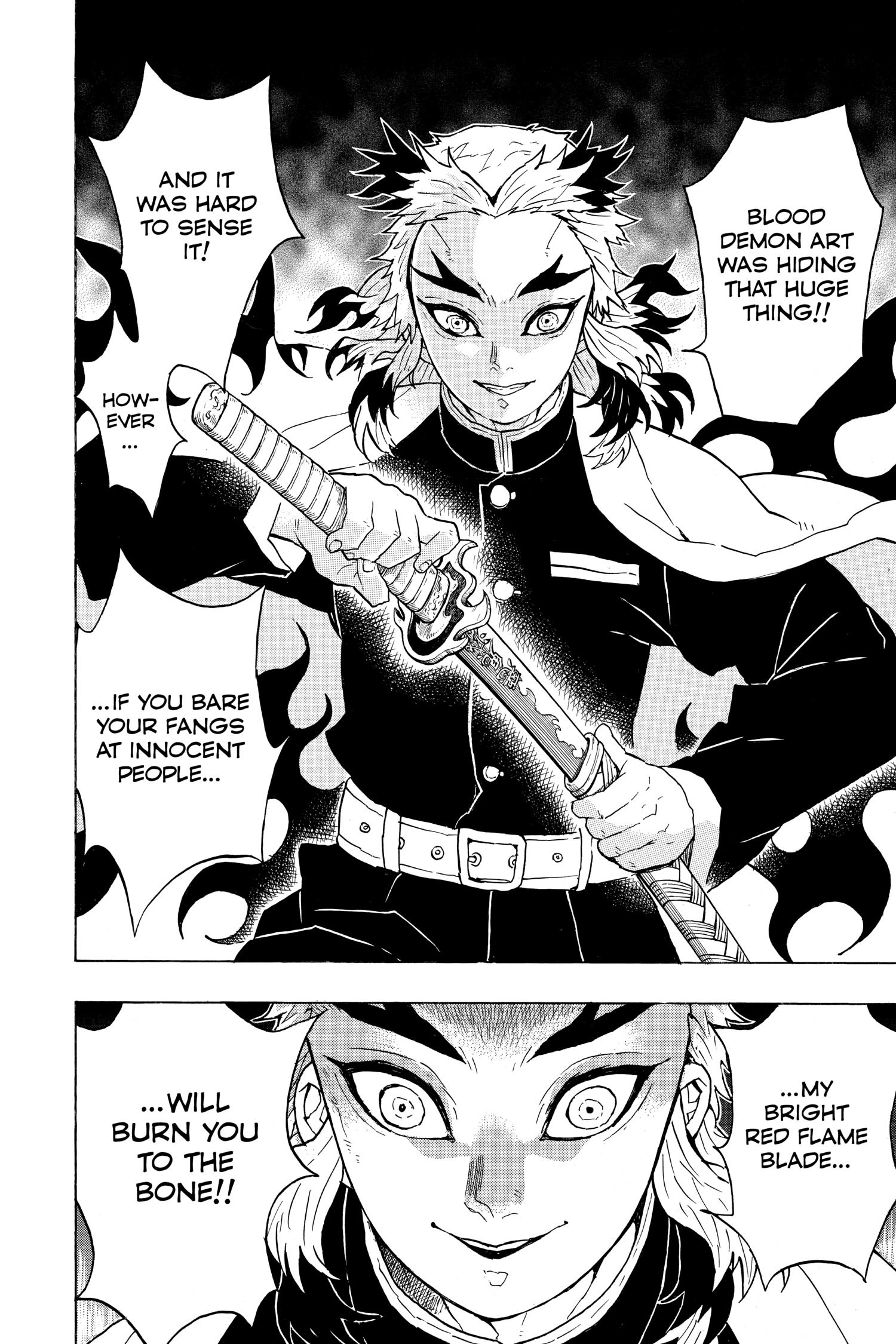
Demon Slayer Vol. 7 (VIZ Media), p.42 ©Koyoharu Gotouge/VIZ Media
Japanese (manga)
この煉獄の赫き炎刀が
Kono Rengoku no akaki entō ga
鬼滅の刃 Vol. 7, p.42
English (VIZ official)
"...MY BRIGHT RED FLAME BLADE..."
Demon Slayer Vol. 7 (VIZ), p.42
Literal meaning
Word-by-word: この (this) + 煉獄 (Rengoku; literal meaning: purgatory/hell-forge, from 煉 'to smelt/refine' + 獄 'prison/hell') + の (possessive particle) + 赫き (archaic/classical form of 赤い 'red'; means bright red, dazzling red) + 炎刀 (えんとう: 炎 'flame/fire' + 刀 'sword') + が (nominative particle marking focus). Literally: "This [Rengoku]'s bright-red flame blade" or "This bright-red flame blade of purgatory."
Register & tone
The archaic adjective form 赫き elevates the register sharply: rather than conversational 赤い, this pulls from classical literature and formal, theatrical speech. The combination of この + possessive の + archaic modifier creates heightened formality and almost ceremonial weight. The nominative particle が marks focus and intensity, suggesting a climactic moment—a challenge or declaration of power. The archaic tone implies a speaker drawing on deep traditions (warrior lineage, classical language, spiritual authority), making the utterance sound otherworldly and potent.
Cultural context
Japanese swords (刀) are forged through multiple heating and folding cycles with tamahagane steel; fire is essential to achieving the blade's strength and character. In Shinto tradition, fire holds sacred purifying power (misogi, ritual cleansing); flames are believed to ward off evil and spiritually cleanse. The name 煉獄 (Rengoku), using characters meaning 'to refine through heat' (煉) and 'hell/prison' (獄), mirrors sword-forging metaphorically: souls are refined and strengthened through trials as steel is refined through fire. The phrase 赫き炎 (bright-red flame) evokes both the literal glow of heated metal and the spiritual fire of Shinto purification—a double image of physical and spiritual refinement.
Why the English version misses the mark
VIZ's all-caps 'MY BRIGHT RED FLAME BLADE' nails the dominance and surface meaning, but sacrifices several layers: (1) The archaic form 赫き is far weightier and more formal than 'bright'—it belongs to classical literature and ceremony, not colloquial speech, and losing this erases the supernatural register. (2) The character's name 煉獄 carries the double meaning 'purgatory/hell-forge'; each time it modifies the blade as possessive (煉獄の炎刀), there is a subtle pun where his identity and the weapon fuse conceptually. VIZ renders it as mere possession, missing the wordplay. (3) The cultural-spiritual freight—the Shinto purification concept, the samurai sword-forging tradition, the idea of refining the soul through trials—evaporates in favor of simple aggression.
Alternative translations
- This blazing flame blade of my purgatorial power...
- Behold this bright, dazzling hellfire sword born of purgatory...
- My soul-refining blade, bright with the fire of hell's forge...
- This brilliant, scarlet flame-blade, tempered in purgatorial heat...
- With this bright red hellfire blade—my purgatory made manifest...
- My blazing crimson blade, bright with the fire of spiritual refinement...
Sources
Linguistic analysis grounded in primary sources
- [manga_volume] 鬼滅の刃 Vol. 7, page 42
How this was made: a Japanese Demon Slayer otaku hand-picked the insight from a massive bilingual database pairing every original Japanese line with its official English edition. AI then translated and wrote up the analysis from those source quotes — every Japanese / English excerpt above is a byte-exact capture from the cited manga editions, not invented.