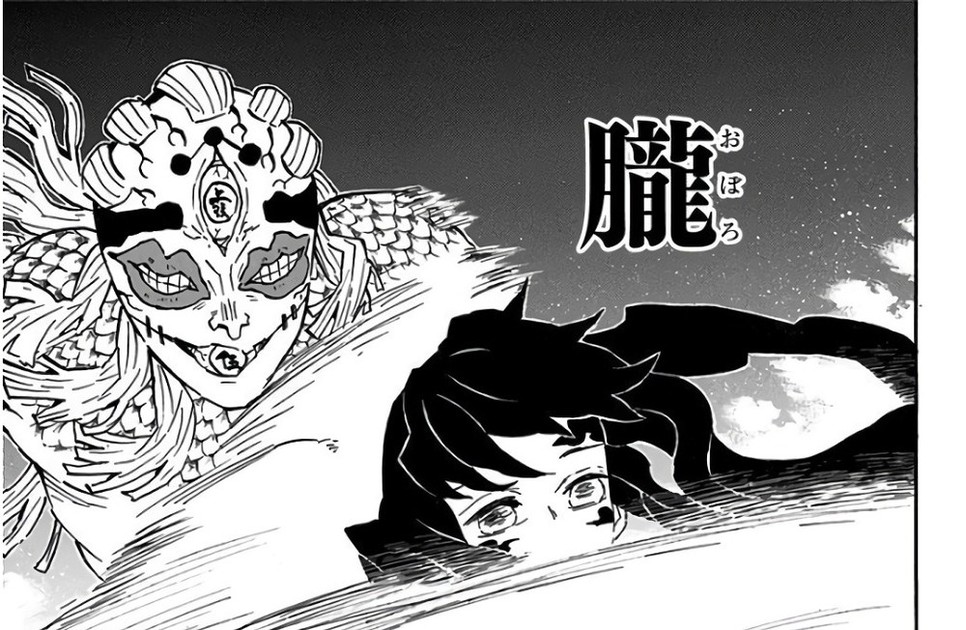
Every other Mist Breathing form is built from at least two kanji or a Japan-specific compound; Oboro is one character, alone, and that structural anomaly is the point. The in-manga explanation (Vol. 14, p.127) spells out why the name fits: the technique works by wildly fluctuating speed rather than a fixed cutting motion — Muichiro appears to move "as slow as a turtle" when visible and vanishes "in the blink of an eye" when hidden, so what an opponent perceives isn't a blade at all but an indistinct blur, a hazy afterimage rather than a legible attack. A single-kanji name describing blur is a more literal fit for that mechanic than any of the two-character compounds used elsewhere in the style, which tend to describe mist as a substance (八重霞, 霞雲) rather than mist as a perceptual effect.
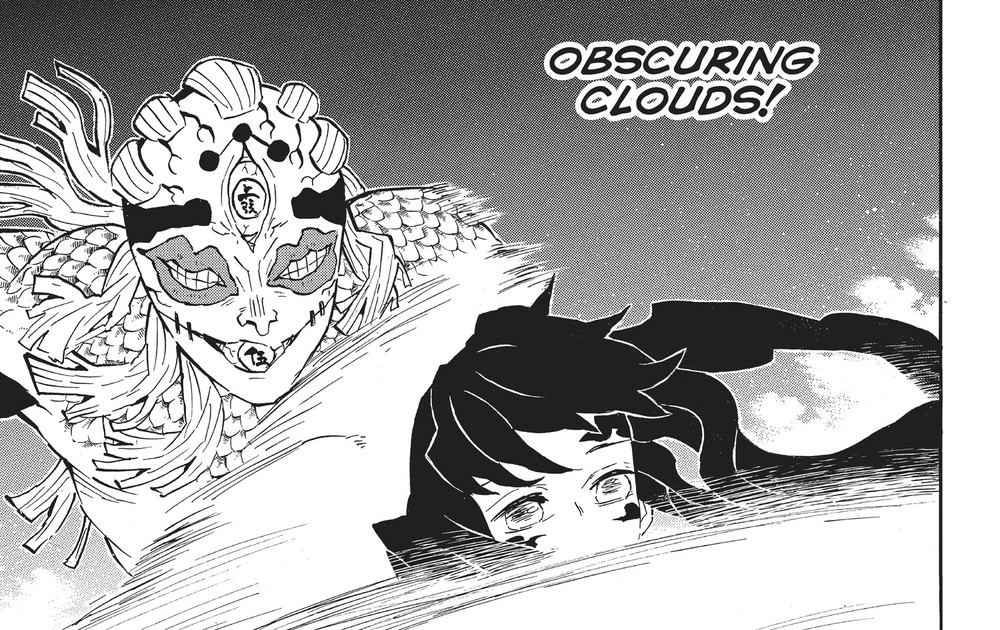
朧's classical home is 朧月 (oborozuki), the soft-focus moon of a spring night — one of the most reliable images in the waka and haiku tradition, evoking gentleness and concealment rather than danger. Naming a Hashira-killing finishing move after a kigo for spring evening moonlight is a genuine tonal inversion: the word's entire poetic weight is gentle, almost romantic, and Gotouge repurposes it for a blade fast enough to end an Upper Rank demon in one exchange. VIZ's "OBSCURING CLOUDS!" is a serviceable functional translation — it conveys the visual-confusion mechanic clearly — but it necessarily drops the moon-specific, seasonal, poetic connotation entirely; there's no compact English phrase that carries both "blur" and "spring moonlight" at once, so the translation opts for the mechanically useful half of the meaning over the literary half.
Oboro is also the only Mist Breathing form the corpus confirms twice against named, high-stakes opponents rather than mid-tier demons: it kills Gyokko (Vol. 14) and later draws a rare admission from Muzan himself — "I've never seen that technique before" — since it postdates every other Mist Breathing form and belongs to Muichiro alone rather than to the swordsman lineage he unknowingly descends from (the historical Mist Hashira, revealed later to be his own ancestor). That detail reframes the whole style retroactively: six inherited, classically-named forms, and then one blunt, single-character technique that the last user of the line invented from nothing.