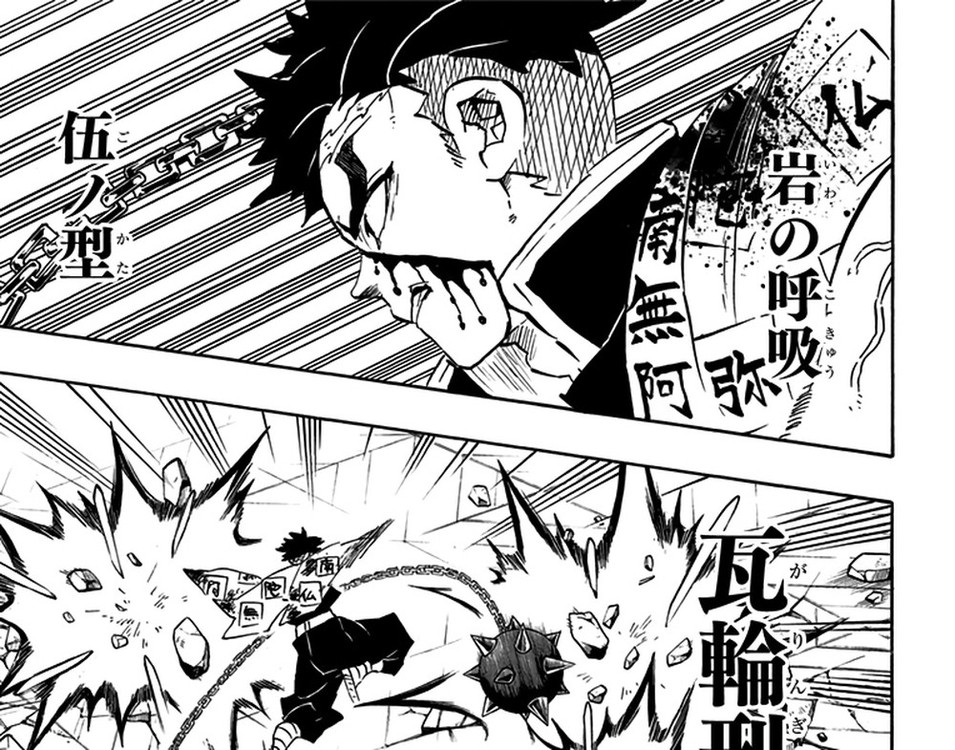
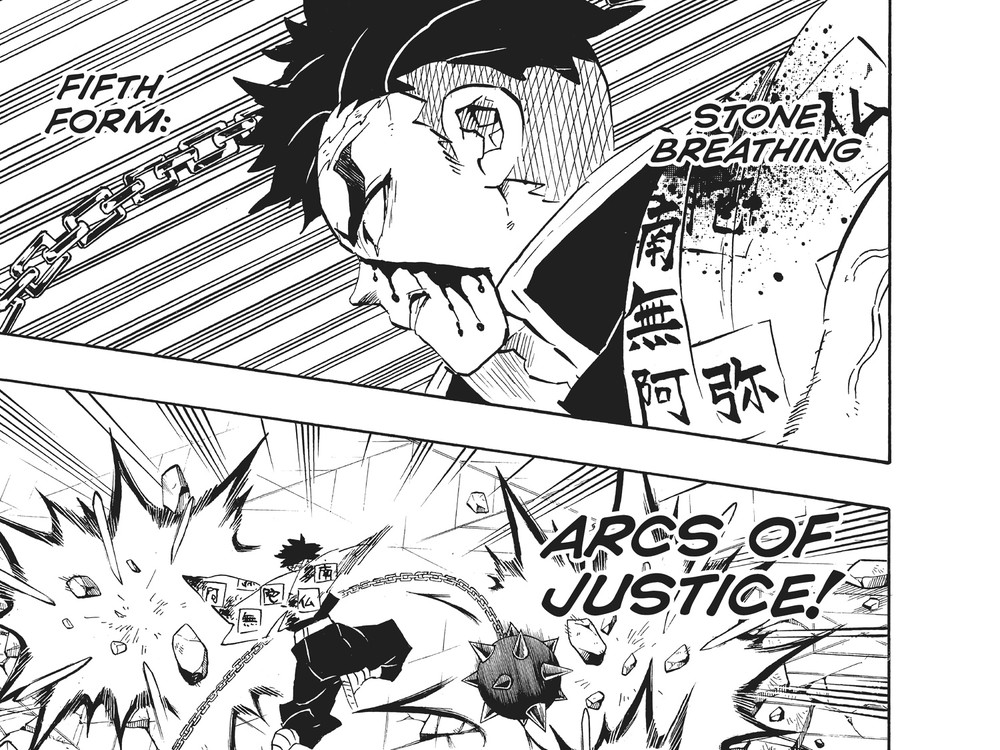
刑部 is not a generic-sounding name component — it's a specific historical institution. In the ritsuryo legal system adopted from Tang China and formalized in Japan from the 8th century onward, 刑部省 (Gyōbu-shō) was one of the eight central ministries, handling criminal prosecution and punishment; the term survived afterward as a common element in personal names and titles (much like "Marshal" or "Constable" becoming surnames in English). VIZ's "Arcs of Justice" is a rare case in this dictionary where a technique name folds real administrative history into what reads, in translation, as pure abstract moralizing — the "justice" isn't metaphorical, it's a direct nod to a literal government office of law enforcement.
瓦輪 ("tile-wheel") is the more purely visual half of the name: traditional Japanese roof tiles are laid in overlapping curved courses, and applying that image to a swinging weapon's arc captures both the shape (a circular sweep) and a texture (the layered, armored look of Gyomei's spiked ball as it whips through the air). Combined with 刑部's judicial weight, the full name reads almost like a sentence handed down — a circular, crushing verdict — fitting for a technique landed in the final confrontation with the series' central villain.
This is the last of the five Stone Breathing forms attested by name in the corpus; together with Forms One and Four's real mineralogy terms and Form Two's structural "heaven-surface" vocabulary, it completes a naming set built almost entirely from geology, architecture, and classical bureaucracy — a very different register from Wind Breathing's meteorology-and-folklore palette surveyed elsewhere in this dictionary, even though both styles belong to Hashira fighting the same final battle on the same pages.