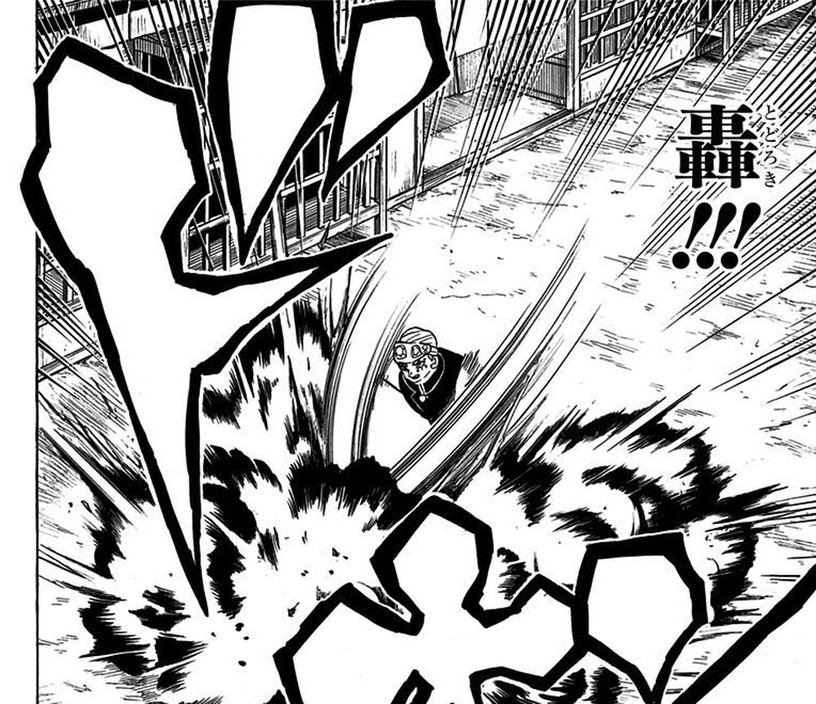
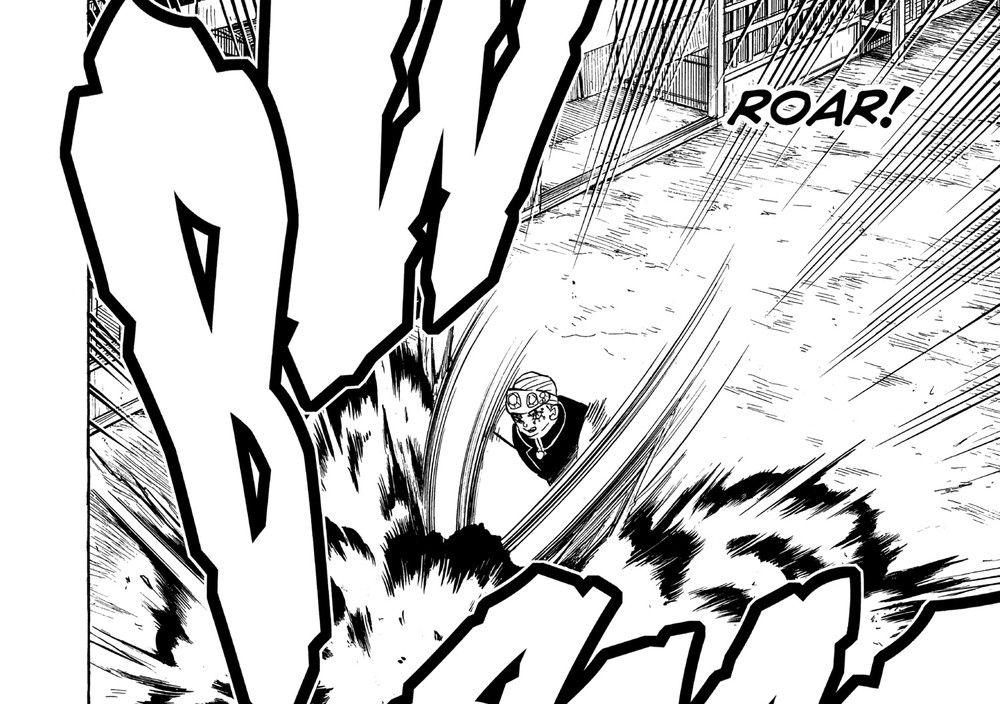
轟 is the only one-kanji technique name in this dictionary's Sound Breathing entries, and that brevity is the point: where 響斬無間 and 鳴弦奏々 build multi-character compounds layering meaning on meaning, the First Form is just the sound itself, unmodified, the way Zenitsu's Thunder Breathing First Form (霹靂一閃) is also its style's single plainest entry. VIZ's "ROAR" mirrors that economy exactly — one plain word for one plain kanji, no attempt to dress it up.
What the one-word name doesn't carry over is the mechanism it's describing. Sound Breathing isn't built on air-current or blade-geometry the way most of the other styles in this series are; it's built on percussion. Tengen fights two-handed with swords that are, functionally, sequenced explosives — the narration on the same page states outright that no one they've hit has survived to explain exactly how they work. "Roar" in English reads as a description of noise or aggression; in the manga's own internal logic, it's closer to a technical specification: this is the form that detonates.
Tengen's own self-mythology — he repeatedly calls himself the "god of festivals" (祭りの神) and frames every fight as a performance — makes 轟 a strange choice of opener precisely because it's the least showy name in his entire arsenal. Compare it to 響斬無間 ("Constant Resounding Slashes," borrowing the name of a Buddhist hell) or 鳴弦奏々 ("String Performance," borrowing a court exorcism rite): both of those forms wrap their violence in ceremony and reference. The First Form skips the theater and just names the blast. It's the technique equivalent of a drummer counting off the beat before the song actually starts.