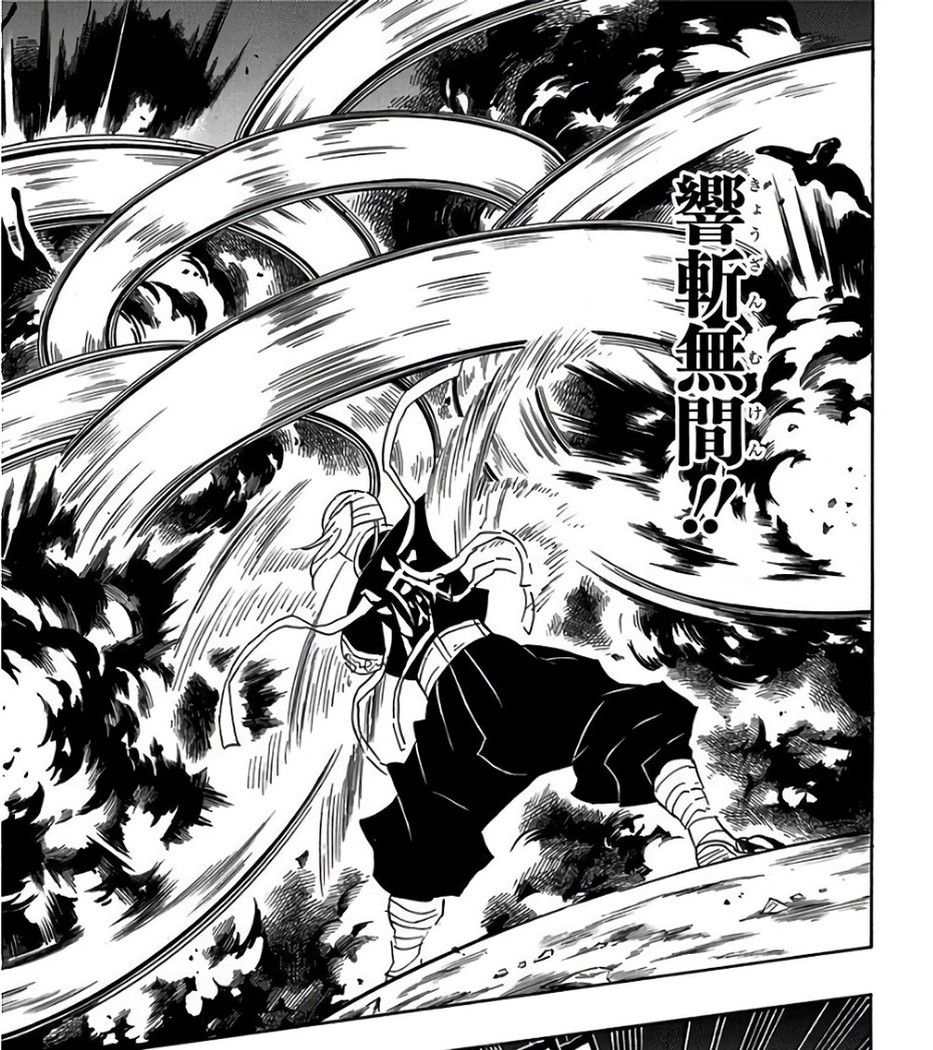
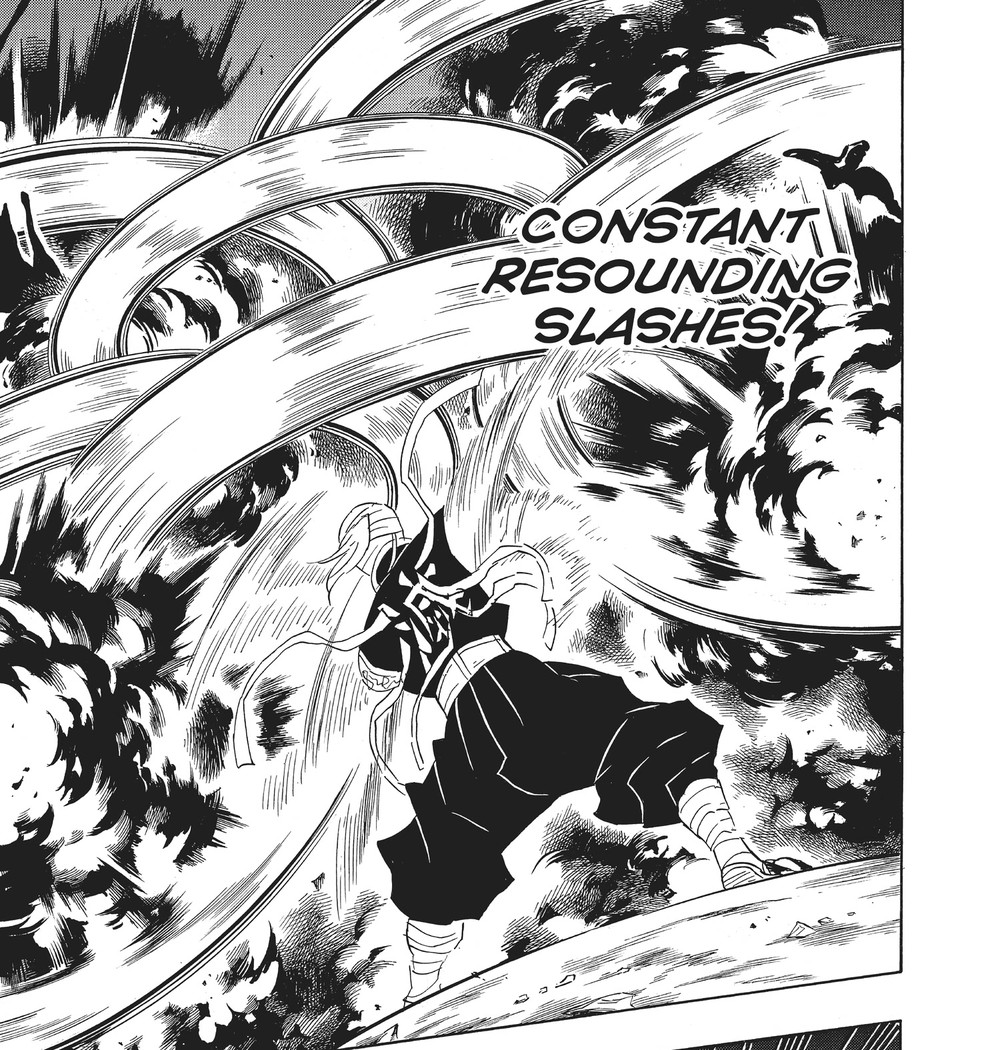
This is the one Sound Breathing form in the corpus that reaches directly into the same Buddhist cosmology this hub's article on 地獄 documents across the rest of the series: 無間 is not a generic intensifier meaning "endless" in the way English readers might assume from context. It's the proper name of a specific hell-realm, the lowest tier of the standard Eight Great Hells doctrine, defined by the absence of any interval between one bout of suffering and the next — which is precisely, technically, what this attack claims to be doing to whoever it hits: slashes with no interval between them, borrowing a cosmological technical term to describe a purely martial idea. VIZ's "CONSTANT RESOUNDING SLASHES" gets the mechanics exactly right and drops the theology entirely; an English reader gets an accurate description of the attack's rhythm with no indication that Tengen just named his sword technique after the worst hell in the Buddhist afterlife.
That gap matters more here than it would for a stray line of dialogue, because Tengen's whole persona runs on performance and reference — he's the self-declared "god of festivals," a former shinobi who now frames every kill as spectacle. Naming a technique after 無間地獄 isn't incidental flavor; it's exactly the kind of grandiose, borrowed-weight reference his character voice reaches for elsewhere (see 鳴弦奏々, this style's Fifth Form, built on a real Heian exorcism ritual). Losing the hell-reference in translation means English readers get the showmanship of the technique without the specific claim underneath it — that Tengen is telling his opponent, in so many words, which hell he's about to put them through.
Mechanically the form matches its own name closely: 響 ("echo, reverberate") describes the technique's actual battlefield effect — a storm of overlapping slash-arcs that keep landing before the sound of the previous one fades — while 無間 supplies the promise that there's no recovery window between hits. It's Sound Breathing's clearest example of a form whose Japanese name works on two levels simultaneously (a literal description of attack cadence, and a specific doctrinal citation) where the English name preserves only the first.