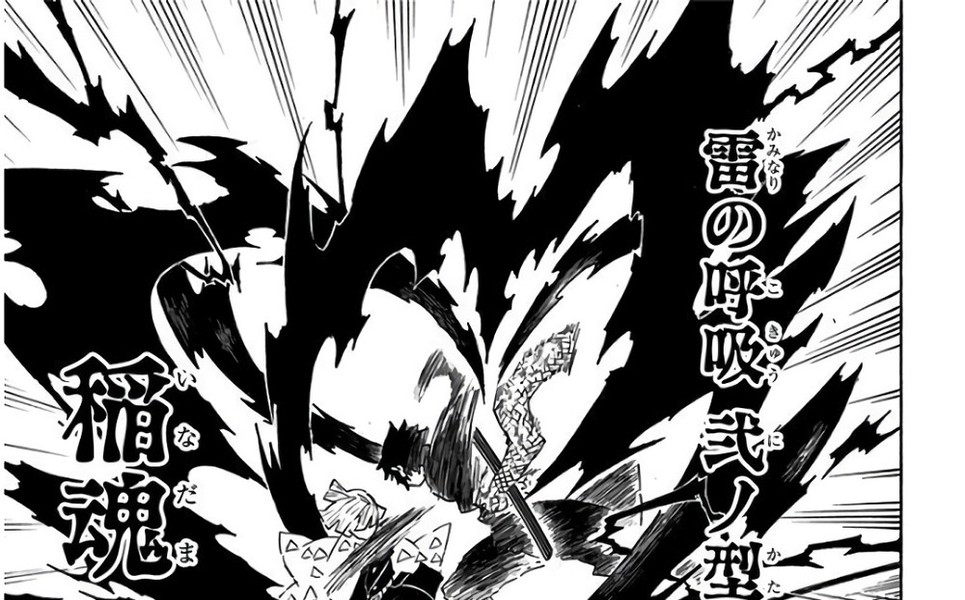
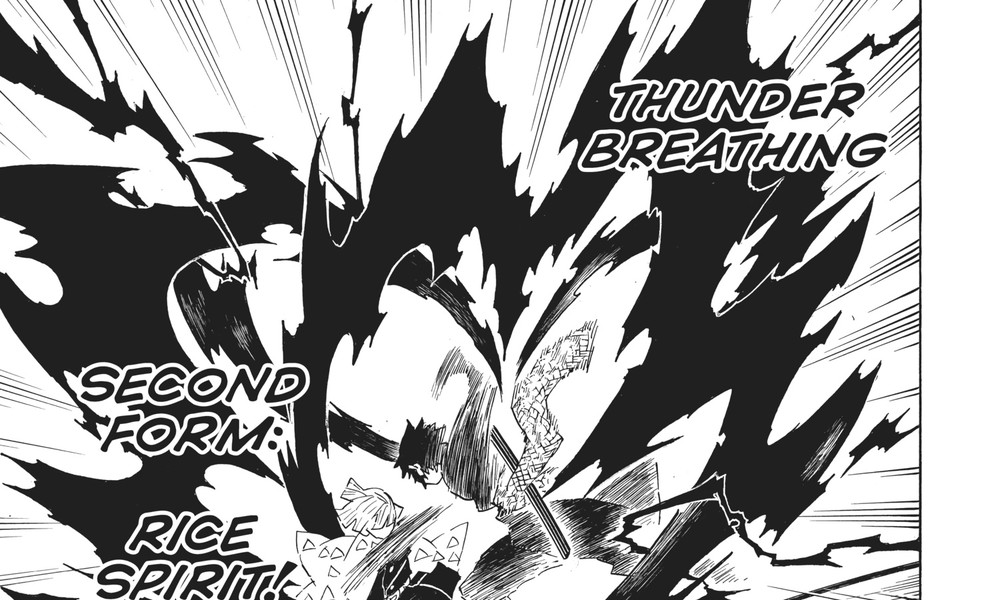
Japanese folk etymology holds that lightning striking a rice field in late summer blesses that year's harvest — hence 稲妻 (inazuma), "the rice plant's spouse," as the everyday word for lightning. 稲魂 taps the same seam of folklore rather than reaching for pure combat imagery, which sets it apart from the plainly descriptive forms around it (遠雷 "Distant Thunder," 電轟雷轟 "Rumble and Flash"): this name is poetic and allusive first, descriptive of the attack itself only second.
That allusiveness is exactly what VIZ's "Rice Spirit" loses. It's a faithful, literal translation of the two kanji, but stripped of the inazuma folklore it becomes an oddly abstract label for a five-hit sword flurry — an English reader gets the noun without the mythology that makes the noun make sense, whereas a Japanese reader hears the lightning-blesses-rice association immediately. It's a useful contrast to Form 1's "Thunderclap and Flash," which translates cleanly precisely because it describes the attack rather than alluding to a folk belief about it.
On the page, Inadama exists in exactly one scene: Kaigaku's climactic duel with Zenitsu, where — now a demon — he unleashes it as a taunt, boasting that he can tell good from evil while cutting down a former comrade. The description that frames it, five strikes "in one breath, in the blink of an eye," previews the fast multi-hit choreography that defines Forms 2 through 6 as a group, in sharp contrast to Form 1's single decisive cut — the clearest on-page evidence of just how far the two students' repertoires diverged before Kaigaku's defection.