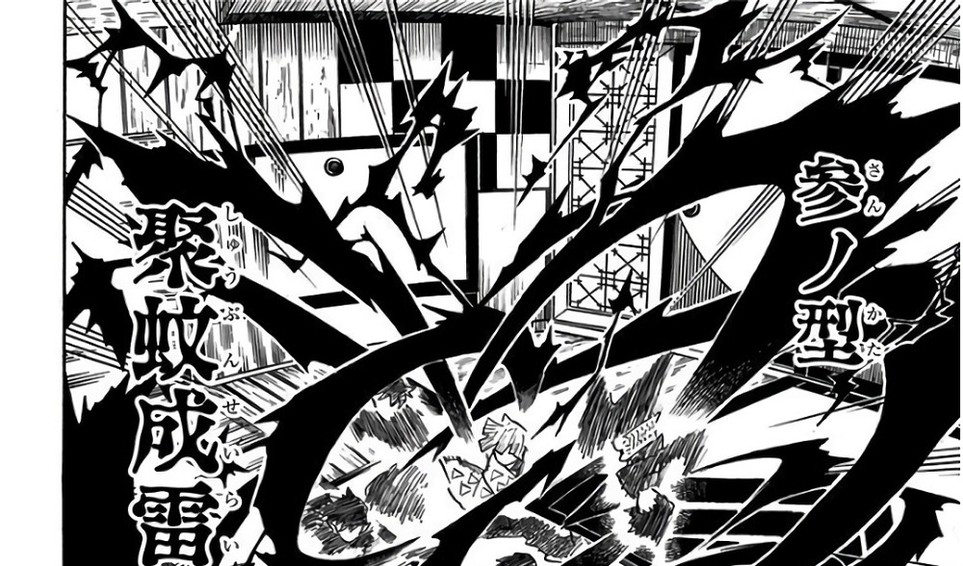
聚蚊成雷 is a genuine classical four-character idiom (jù wén chéng léi in Chinese), traditionally used as a warning that a chorus of small rumors or petty voices can snowball into something that feels undeniable — the manga equivalent of "death by a thousand cuts" mixed with "mountains out of molehills." It's the most literary, most yojijukugo-like of all six original Thunder Breathing names; nothing else in the set (稲魂, 遠雷, 熱界雷, 電轟雷轟) is an inherited proverb rather than an invented or plainly descriptive compound.
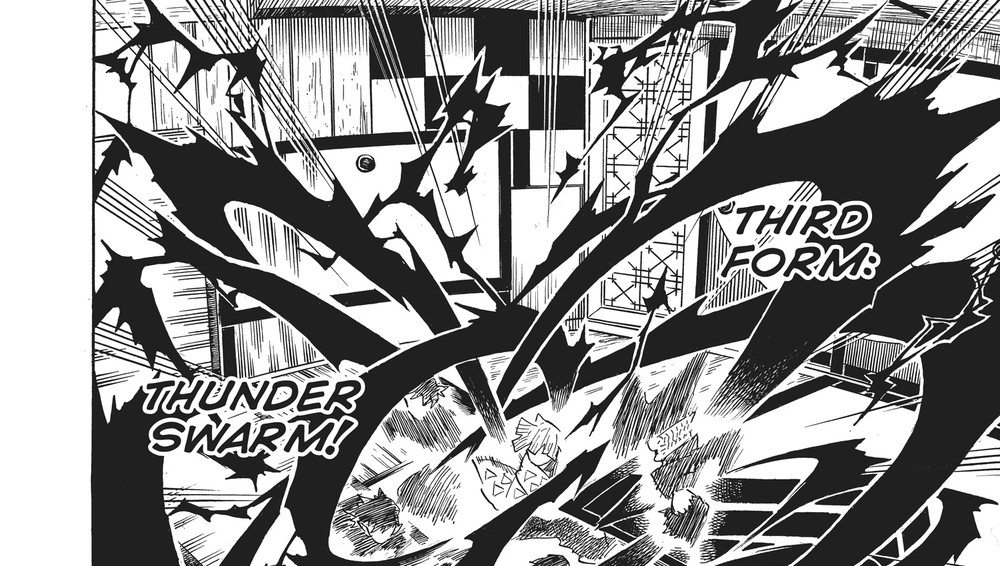
VIZ's "Thunder Swarm" trades the proverb for a description of the physical choreography — many small hits swarming together — which is a defensible localization but discards the idiom entirely. An English reader gets a picture of the attack; a Japanese reader gets that picture plus a centuries-old saying about accumulation. It's a clean example of how much cultural cargo a single four-kanji compound can carry that a two-word English phrase simply can't.
Its only appearance is Kaigaku's demonstration during the final duel, delivered right beside his chilling redefinition of morality — "those who correctly evaluate me and know my worth are good; those who rate me too low are evil." The technique's own logic (many small things accumulating into one overwhelming force) quietly mirrors Kaigaku's psychology: a lifetime of petty slights and resentments accumulating, mosquito by mosquito, into the single decision to become a demon.