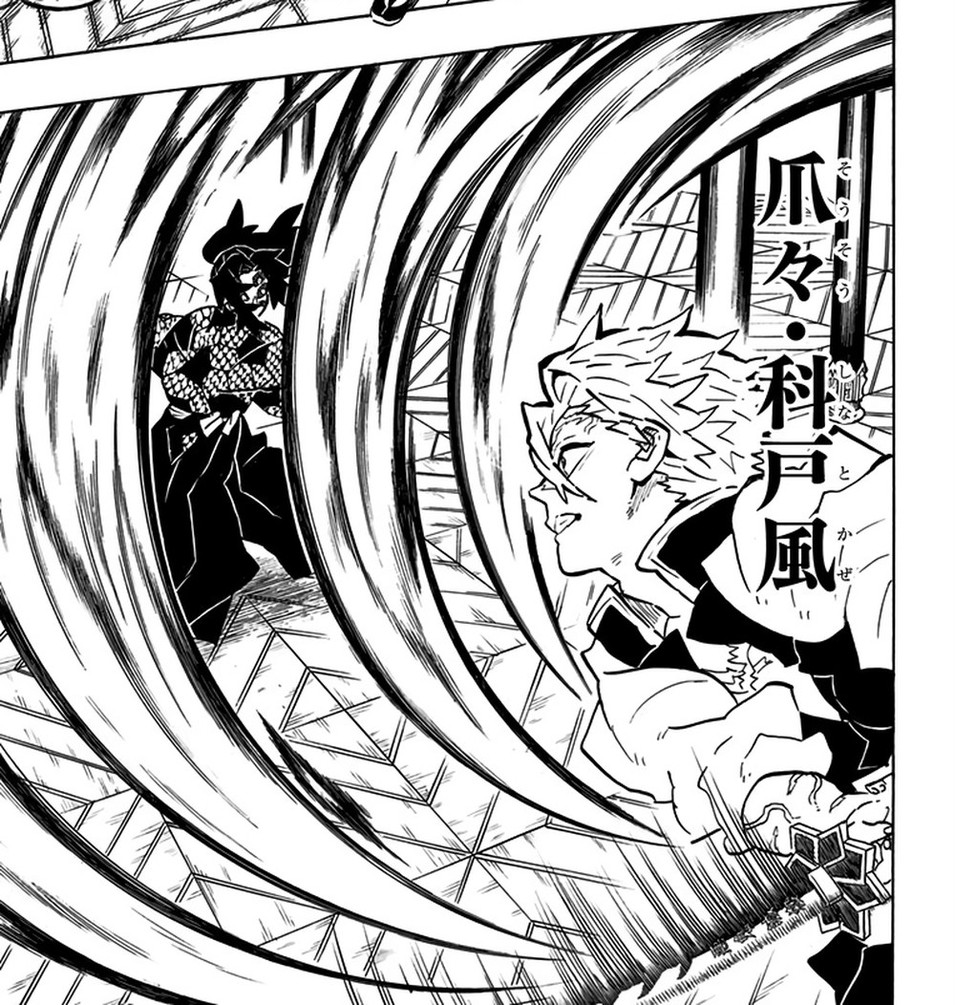
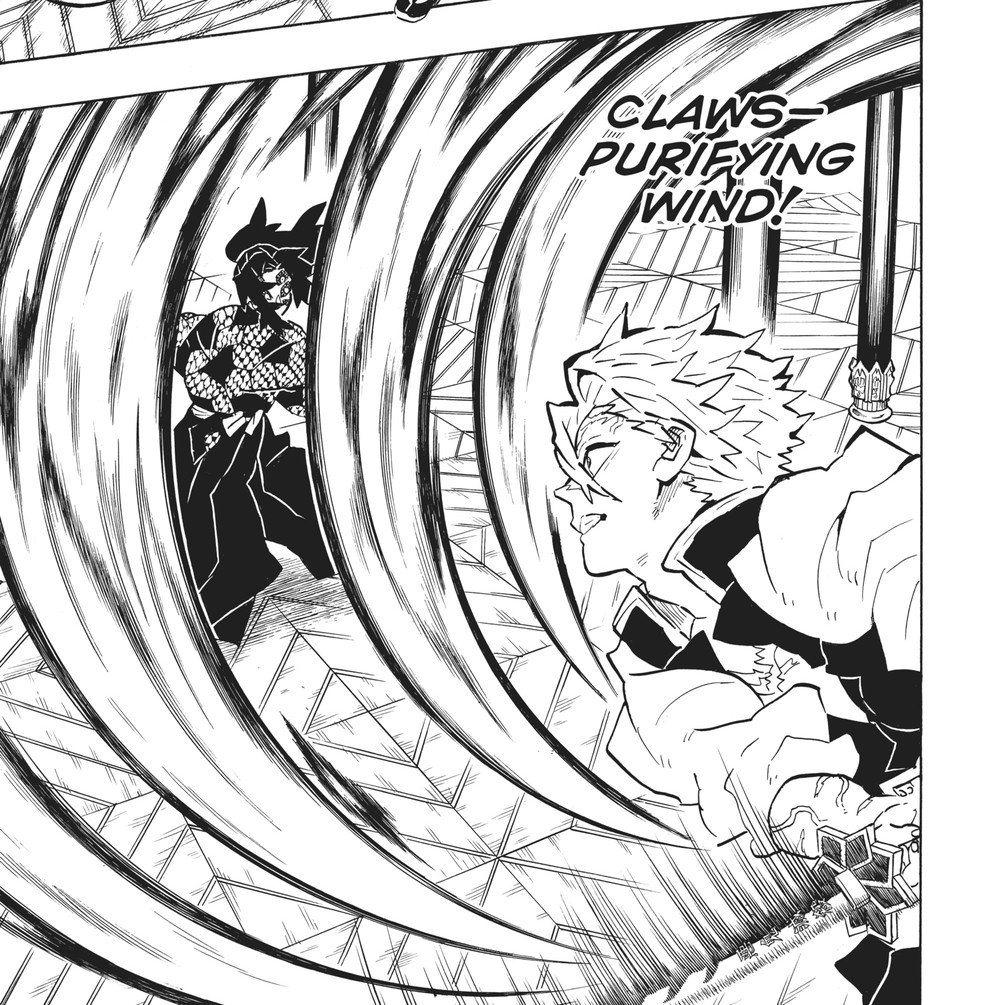
科戸風 is not generic poetic wind-language — it's a specific citation. In the Shinto purification rite (harae), the god Shinatsuhiko is invoked by name to "blow away" sin and defilement on the wind; 科戸 is his liturgical epithet, drawn straight from the norito texts still recited at shrines today. VIZ's "Claws-Purifying Wind" is one of the few renderings in this dictionary that actually preserves the source's religious register ("purifying") rather than flattening it into plain meteorology — a rare case where the English reader gets the cultural freight largely intact.
The corpus's own automated alignment misfires on this exact page: the raw pairs record for Vol. 19 p.136 stores the English as "CLAW-CLEANING WIND" — plausible-sounding, but not what is actually lettered on the real VIZ page, which reads "CLAWS-PURIFYING WIND!" over two lines. This volume sits inside a known pagination-offset stretch, and "CLAW-CLEANING" looks like an artifact of the alignment engine guessing at a shifted bubble rather than a real VIZ variant — a useful reminder that even non-null OCR fields need a visual check against the actual page before they're trusted as canon.
Structurally, "claws" as the attack's visual vocabulary is a small motif break for Sanemi: most of his named forms describe weather (dust storms, gales, typhoons) rather than an anatomical image, and the doubled 爪々 gives the second form a more visceral, animalistic edge than the meteorological grandeur surrounding it on either side.