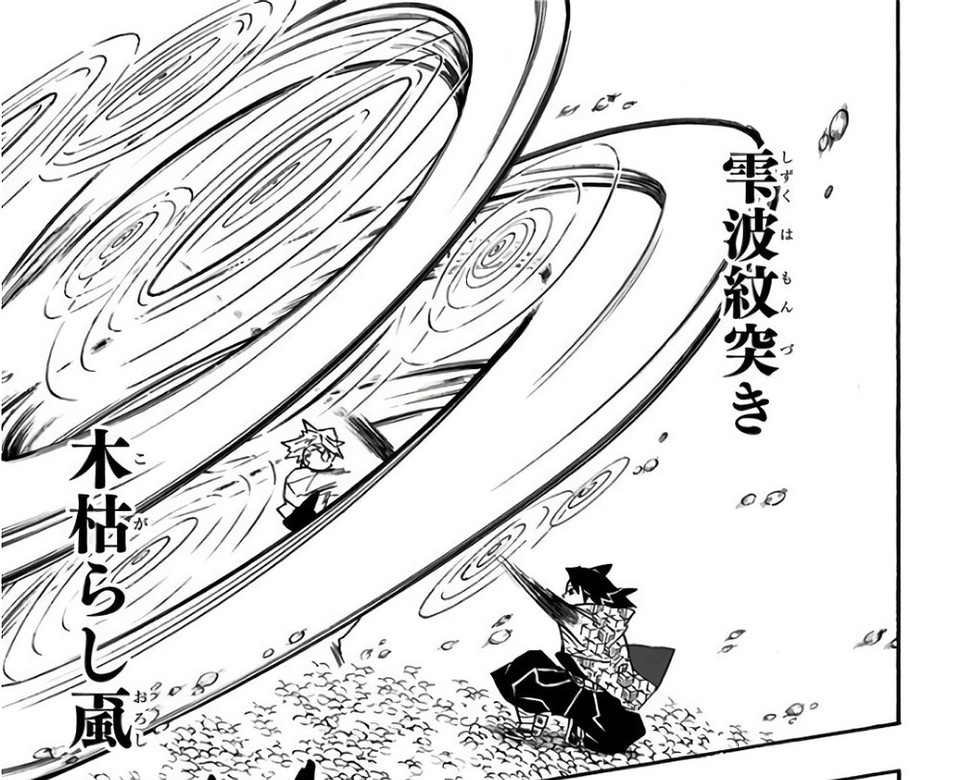
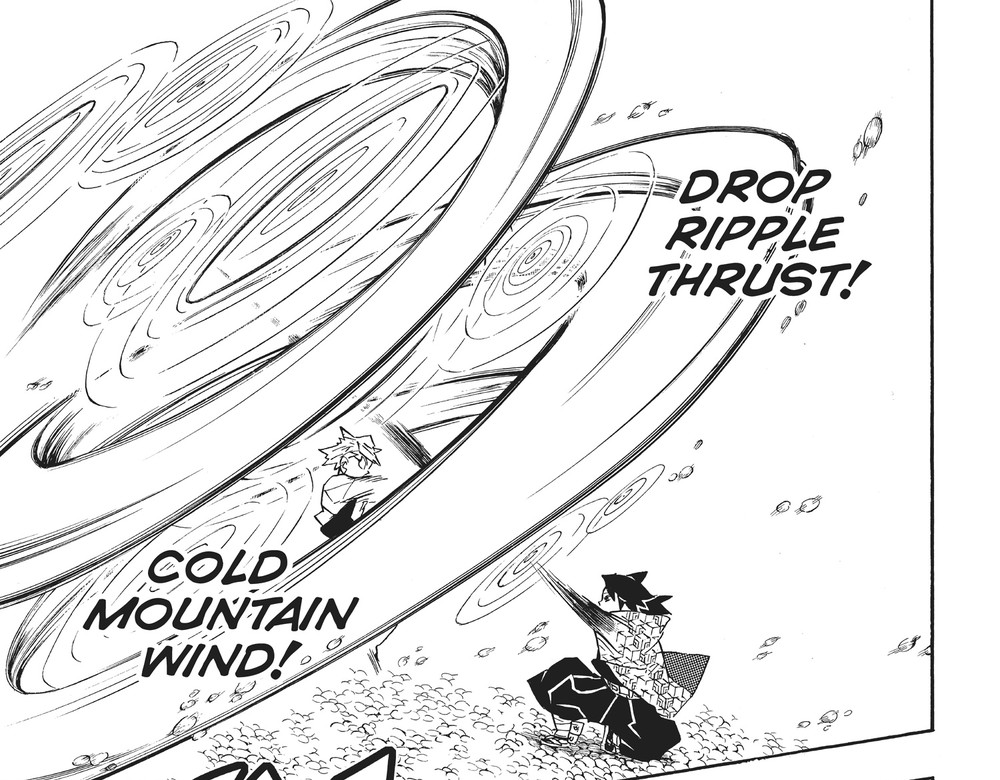
Both halves of this name are real, still-used Japanese meteorological terms rather than invented flavor text. 木枯らし is a recognized kigo (season word) in haiku poetry, specifically marking the first bitter wind of the year that finishes off the last clinging autumn leaves — it shows up constantly in classical and modern Japanese poetry alike. 颪 is even more concrete: it's the character used in the actual names of regional downslope winds across Japan (Rokko-oroshi off Mt. Rokko, Tsukuba-oroshi off Mt. Tsukuba), and the kanji itself is a kokuji built specifically to depict "wind" stacked over "down." VIZ's "Cold Mountain Wind" keeps the cold and the mountain but discards both proper terms' cultural specificity into generic English weather description — an efficient compression, but it erases the fact that Sanemi is naming his attack after two textbook categories of Japanese wind, not describing an ad hoc gust.
The corpus catches this technique twice, thirteen-plus volumes apart: first as a demonstration move against Genya during off-page training (Vol. 16, alongside Genya's borrowed Water Breathing Seventh Form on the same spread), then again landed on Muzan himself in the Infinity Castle climax (Vol. 23) — the same span-of-growth structure this dictionary has already noted for other Hashira's early numbered forms, where a technique first shown in training resurfaces, unchanged in name, as a serious weapon against the final antagonist.
One OCR/alignment note: the corpus's own automatic "corrected_jp" fields disagree with each other across the two occurrences — one page's correction reads 木枯らし嵐 (with 嵐, "storm"), the other's reads 木枯らし颪 (with 颪, "mountain downdraft"). Visual confirmation against both real pages favors 颪 as the canonical kanji (it is also the reading consistent with published franchise reference material), so that is what this entry uses as the display name.