です/ます forever: the politeness that never graduates
Naruto, Sasuke, Kiba, Shikamaru — nearly every genin in the cast speaks in the plain, contracted forms of casual young-male Japanese. Lee is the outlier: his sentences consistently close on です or ます even when the content is a battle cry. 「見ていて下さいガイ先生!ボクも光ってみせます!!」 ("JUST WAIT, MASTER GUY! I'LL MAKE YOU PROUD!!") uses the humble-polite 見ていて下さい ("please watch") and the ます-form 光ってみせます ("I'll show you I can shine") in the same breath as a fist-pump. It reads, in Japanese, less like a shōnen protagonist and more like a junior employee addressing a respected superior — which is functionally what Lee's relationship to Gai is, formalized into grammar. VIZ's English can't mark this register at all; "I'll make you proud" carries none of the です-ます scaffolding that makes Lee sound so unlike everyone standing next to him.
ボク, not オレ: the pronoun of a kid who never rushes to sound tough
Lee's first-person pronoun compounds the effect. Where Naruto, Kiba, and (eventually) Shikamaru all use the rougher, masculine-coded オレ, young Lee sticks to ボク — the softer "I" more typical of polite, younger boys, and one most of his peers abandon as they get older. 「ポクは強いですから...」 ("...'CAUSE I'M SO STRONG!") pairs ボク with です in a single short sentence — soft pronoun, polite copula, aggressive claim — a combination that has no clean English equivalent. By adulthood, this shifts: 「オレの青春はまだ色あせちゃいないぞ!!」 ("THE SPRINGTIME OF MY YOUTH HASN'T FADED YET!!"), shouted years later mid-battle, uses オレ instead. It's a small, rarely-noted detail: Lee's pronoun eventually catches up to his teammates', but his sentence-final politeness never does — even as an adult, few of his lines end without a です or a ます somewhere in them.
The wooden post scene: crisis of faith, still in keigo
Lee's most emotionally exposed moment — alone at a training post, doubting the entire premise of his life — is delivered in the same register as his cheerful boasts, which is what makes it land: 「...果たしてそれは本当でしょうか...?」 ("...DO YOU REALLY... ...MEAN THAT?") questions his own teacher's praise using でしょうか, a polite, tentative question form, even in private, even to no one. 「だけど...本当の天才には敵わないんじゃないかっ...最近そう思いはじめました」 ("BUT... LATELY, I'VE STARTED TO FEEL THAT I HAD NO HOPE... ...OF EVER MEASURING UP TO A TRUE GENIUS.") closes on はじめました, the polite past form of "began to" — a boy whose despair still can't shake the grammar of good manners. It's the same です-ます structure that carries his post-defeat plea to his teacher, 「ガイ先生...認めて下さい...」 ("MASTER GUY... PLEASE... NOTICE ME..."), where 下さい turns a cry of desperation into, technically, a polite request.
"Even without ninjutsu or genjutsu" — the one sentence he never breaks form on
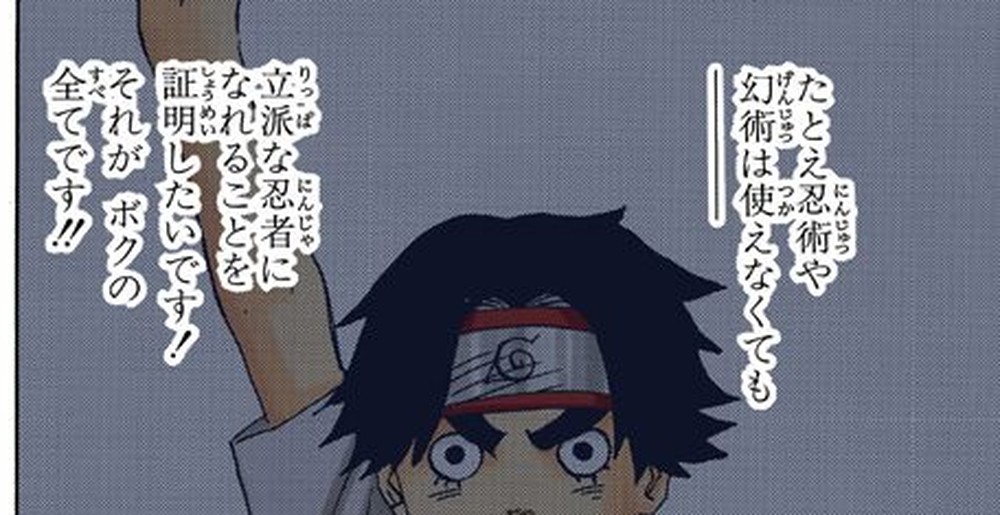
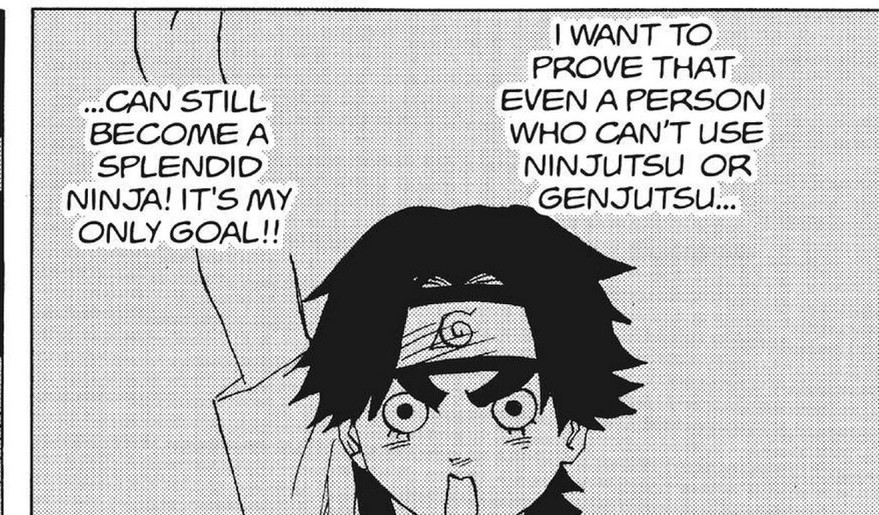
Lee's clearest thesis statement pairs his signature politeness with his signature defiance in one sentence: 「たとえ忍術や幻術は使えなくても立派な忍者になれることを証明したいです!それがボクの全てです!!」 ("I WANT TO PROVE THAT EVEN A PERSON WHO CAN'T USE NINJUTSU OR GENJUTSU... CAN STILL BECOME A SPLENDID NINJA! IT'S MY ONLY GOAL!!"). Both clauses end on です, exclamation points and all — proof that for Lee, raising his voice and dropping his manners are two entirely separate decisions, and he only ever does the first one. His teacher and constant reference point across every line on this page is covered in full in 歯が立たない and the bite VIZ turns into a verdict and 肝に銘じる and Guy's own register; his rival from the Chūnin exam finals is covered on the companion page: Naruto Uzumaki's quotes.