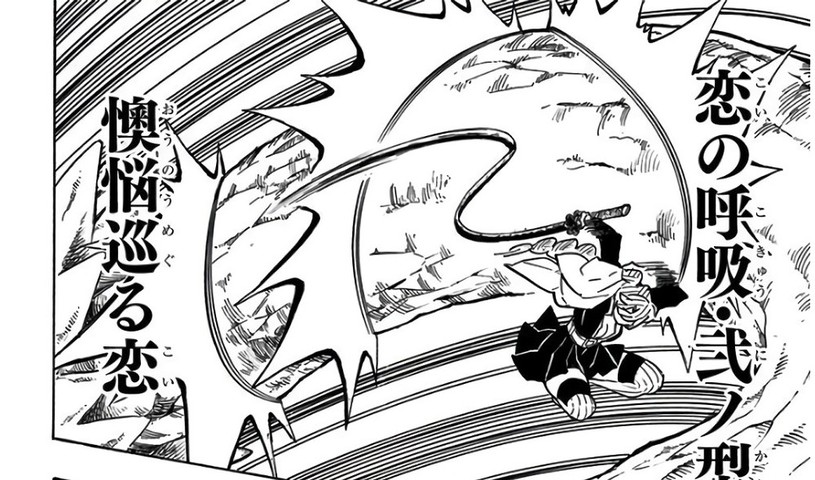
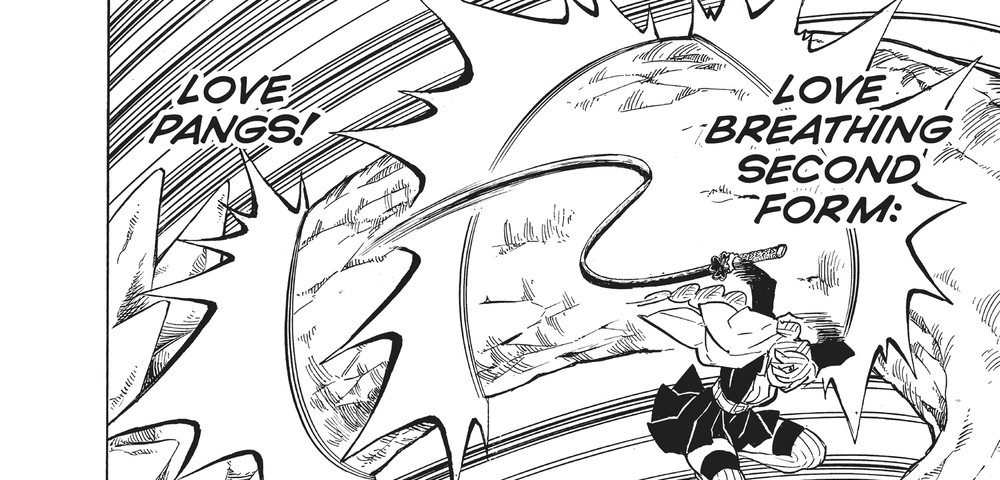
"LOVE PANGS" is a smooth, idiomatic English choice, and on a pure combat-name level it works — two short punchy syllables, easy to shout. But it quietly launders out the strangest thing about the Japanese: grammatically, 懊悩巡る恋 makes anguish the active force and 恋 the noun being circled by it. Love isn't described as painful here so much as anguish itself is described as something with a circuit, a route it walks, and love is the destination it keeps returning to. "Pangs" collapses that entire idea into a single, static symptom-word — the ache without the loop.
懊悩 is worth pausing on precisely because it barely exists in spoken Japanese; a native speaker is far more likely to reach for the plain 悩み (nayami, "worry, trouble") in daily conversation. Reaching for 懊悩 instead signals register — this is meant to sound like it belongs in classical love poetry (和歌-adjacent, the same tradition that gives Japanese court literature its stock vocabulary of romantic suffering), not in a fight manual. Placed as the SECOND form of a named breathing style, right after an opener titled after a trembling heartbeat, it establishes that Love Breathing's naming convention isn't going to ease into combat-name territory at any point — every subsequent form doubles down on the same register instead.
Structurally the technique matches its name: Mitsuri's whip-blade doesn't strike in a straight line so much as orbit the target, closing distance from a spiral rather than a lunge — the JP page shows her mid-spin, sword trailing behind her in a coiled arc. "Circling" is thus doing real technical work in the Japanese name (describing the attack's actual geometry) that "pangs" simply doesn't carry over; an English reader gets the emotional flavor of the name without any hint that it's also, literally, describing how the blade moves.