Nami is the Straw Hat Pirates' navigator — a former thief who spent ten years smiling at the man who murdered her mother, secretly buying her village back from him one coin at a time. Her Japanese runs almost entirely on 私 (watashi) and blunt feminine sentence endings — よ, わね, の — whether she's boasting about her navigation, ordering the crew around, or breaking down in front of Luffy. This page collects nine signature lines: her pirate-hating, money-loving self-introduction, her childhood vow to map the world, the Arlong-arc breakdown that ends in the most quoted plea in the series, and the weather-forecaster's boast that defines her as a fighter — each verified against the Japanese tankōbon and paired with VIZ's official English.
Nami's quotes — Japanese vs official English
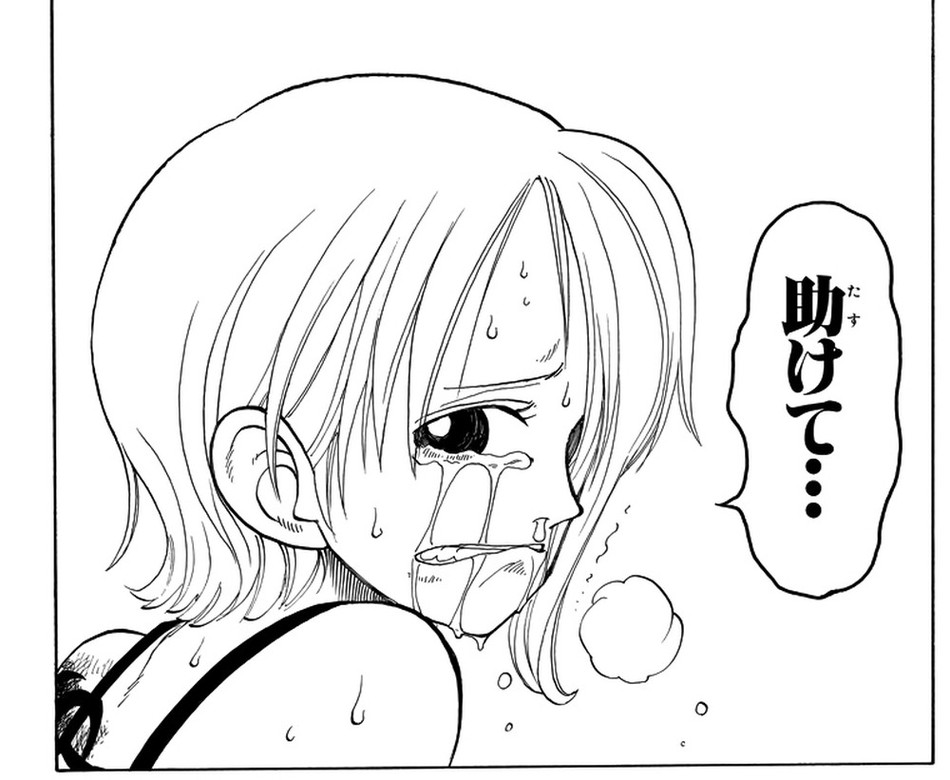
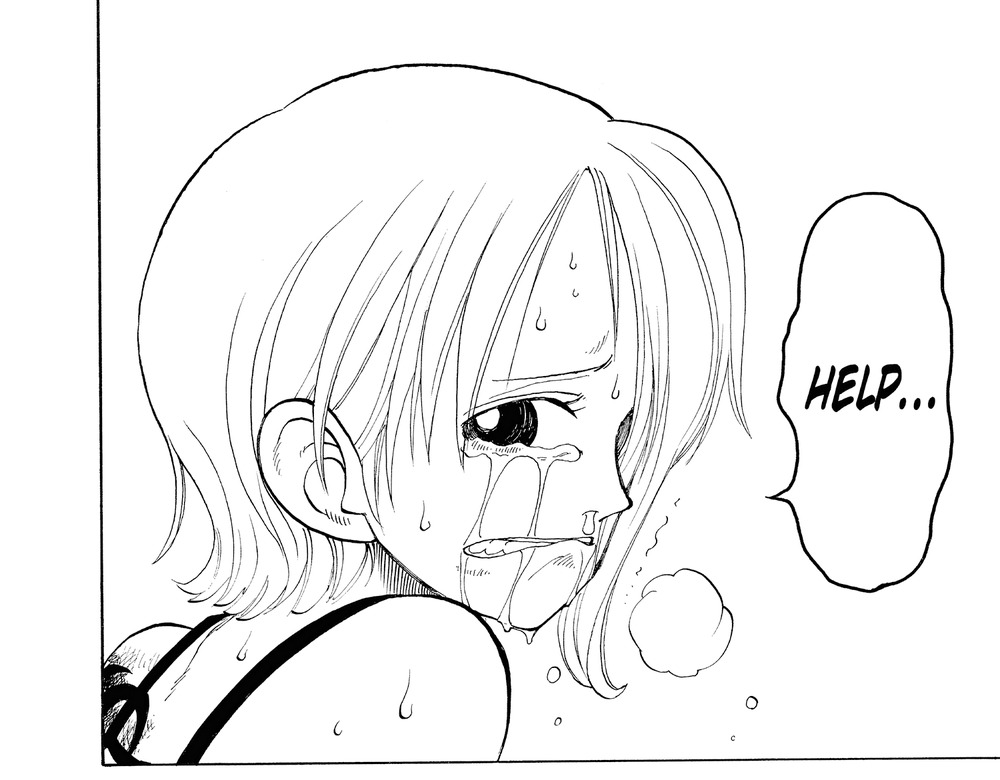
ルフィ 助けて...
Rufi... tasukete...
“LUFFY... HELP...”
Literally: Luffy... help (me)... — 助けて is the bare te-form request, no です/ます, the first time she's asked anyone for anything
Vol. 9, p.200 — Her first words in eight years asking for help — collapsed in the street after Arlong strikes her down, in front of Luffy
私が世界で一番嫌いなものはね 海賊なの!!!好きなものはお金とみかん!!
Watashi ga sekai de ichiban kirai na mono wa ne, kaizoku na no!!! Sukina mono wa okane to mikan!!
“IF THERE'S ONE THING IN THIS WORLD I REALLY HATE... ...IT'S PIRATES!! BUT I LOVE MONEY! AND TANGERINES!”
Literally: The thing I hate most in the world, you know — it's pirates!!! The things I like are money and tangerines!!
Vol. 2, p.20 — Sizing up a beaten Buggy pirate as a potential mark — introducing herself in one breath as pirate-hater and money-lover
航海の腕にかけては私の右に出る者はそうそういないでしょうね
Kōkai no ude ni kakete wa, watashi no migi ni deru mono wa sōsō inai deshō ne
“I'M THE BEST NAVIGATOR AROUND!”
Literally: When it comes to navigating skill, there's no one who'd easily surpass me, I'd wager
Vol. 2, p.17 — Pitching herself to Luffy as crew — a boast wrapped in the hedge でしょうね, "wouldn't you say"
自分の目で見た〝世界地図〟を作るの!!
Jibun no me de mita sekai chizu o tsukuru no!!
“AND WHEN I'VE SEEN EVERYTHING WITH MY OWN EYES, I'M GONNA MAKE A MAP OF THE WHOLE WORLD!!”
Literally: I'm going to make a "map of the world" that I've seen with my own eyes!!
Vol. 9, p.115 — Telling Bellemère her dream, age eight, over a hand-drawn map of the village
もう私...!!あいつらに傷つけられる人を見たくないの!!
Mō watashi...!! Aitsura ni kizutsukerareru hito o mitakunai no!!
“I... I DON'T WANT ANYONE ELSE TO BE HURT BY THEM !!!”
Literally: I just... I don't want to watch people get hurt by them anymore!!
Vol. 9, p.196 — Begging the villagers not to fight Arlong's crew — the thief's mask cracking in public for the first time
何よ!!正しく生きてベルメールさんみたいに殺されるんなら!!
Nani yo!! Tadashiku ikite Berumēru-san mitai ni korosareru n'nara!!
“I DON'T CARE!! BELLE-MÈRE TRIED TO LIVE A DECENT LIFE, AND SHE GOT KILLED FOR IT!!”
Literally: What of it!! If living honestly just gets you killed like it did Bellemère!!
Vol. 9, p.162 — Screaming at Nojiko and Genzo, justifying ten years of smiling at Arlong's crew while secretly buying back the village
それよりその足の出血なんとかしなさいよ!見てるこっちが痛いわ
Sore yori sono ashi no shukketsu nantoka shinasai yo! Miteru kocchi ga itai wa
“FORGET THAT. DO SOMETHING TO STOP YOUR LEG FROM BLEEDING! JUST LOOKING AT IT HURTS ME.”
Literally: Forget that — do something about that leg bleeding! Watching it hurts even me
Vol. 14, p.109 — Ordering Zoro to deal with his own wound mid-battle, bossiness standing in for concern
そうよね!!!あんたら急ぎなさいよブッ飛ばすわよ!!
Sō yo ne!!! Antara isogi nasai yo, buttobasu wa yo!!
“THAT'S RIGHT, HURRY IT UP, YOU GUYS, OR I'LL KICK YOUR BUTTS!”
Literally: That's right!!! You lot, hurry up — or I'll send you flying!!
Vol. 41, p.221 — Ordering Chopper and the others to move faster at the Enies Lobby drawbridge, Sanji swooning at the tone
予報よ!! この部屋の天候は私のものよ!!!
Yohō yo!! Kono heya no tenkō wa watashi no mono yo!!!
“...IT'S A FORECAST!! THIS ROOM'S CLIMATE BELONGS TO ME!!”
Literally: It's a forecast!! This room's weather is mine!!
Vol. 43, p.52 — Correcting Kalifa's word choice mid-fight — 予言 "prophecy" rejected for 予報 "forecast," the professional's precision even in combat
All lines are byte-exact captures from a bilingual corpus of the Japanese tankōbon and the official VIZ Media edition.
Nami's first-person pronoun never wavers: 私 (watashi), the standard, slightly formal "I," used identically whether she's sizing up a mark, negotiating a split, or screaming at Arlong. That's a real choice — her foster sister Nojiko, one panel over in the same flashback chapters, reaches for あたし instead (あたしはノジコここでみかん作ってんの — "I'm Nojiko, I grow tangerines here," Vol. 8, p.161), the rougher, more countrified "I" that marks Nojiko as the plainspoken one and Nami as the sister who always had bigger plans than the orchard. Nami's 私 belongs to the same self-presentation as her taste for money and fine clothes: even orphaned and thieving, she talks like someone who expects to end up somewhere better.
Her sentence endings do the emotional work English mostly can't touch. よ closes almost everything she says with force — a claim, not a suggestion: 私の予報は外れない!! ("my forecast will not fail," Vol. 43), この部屋の天候は私のものよ!!! ("this room's weather is mine," same volume). の softens the same force into confession: 自分の目で見た世界地図を作るの!!, the eight-year-old's vow to Bellemère, and もう私...!!あいつらに傷つけられる人を見たくないの!!, the adult version of the same sentence breaking in public for the first time in the Arlong arc. わ shows up when she's needling someone she actually likes rather than an enemy — 見てるこっちが痛いわ, "watching it hurts even me," aimed at a bleeding Zoro she'd never admit to worrying about.
The imperatives are where the bossiness lives, and they're almost all なさい/なさいよ — the moderately sharp command form, one notch more polite than a bare imperative but with none of the softening a real request would carry: 出血なんとかしなさいよ, 急ぎなさいよ. It's the grammar of someone used to being listened to, aimed at people she isn't actually afraid of losing — the same dynamic this site tracks in 肩を並べる, the idiom for standing shoulder-to-shoulder that English only reaches for on parade grounds: Nami orders the crew around like an equal who's also unmistakably in charge. When she's genuinely out of patience rather than performing crossness, the site's 虫の居所が悪い — the mood article that reframes English's flat "provoked" is closer to the register she's actually speaking in.
VIZ's translators are sharpest exactly where the joke is grammatical. 予言じゃない...予報よ!! turns on the gap between 予言 (prophecy, mystical) and 予報 (forecast, professional) — Nami correcting Kalifa's word choice mid-fight, insisting her power is a science, not magic — and VIZ's "IT'S NOT A PREDICTION... ...IT'S A FORECAST!!" lands the distinction almost exactly. What the English can't carry is the pronoun-and-ending texture underneath: 私の右に出る者はそうそういないでしょうね ("there's no one who'd easily surpass me, I'd wager") becomes the flatter, punchier "I'M THE BEST NAVIGATOR AROUND!" — true to the boast, but the hedge in でしょうね, the little space she leaves for someone to prove her wrong, disappears. It's the same gap this site documents in how she talks about her mother: see 水の泡, the idiom for a hope gone like foam on water that English trades for plain "failure" — Nami's entire ten-year plan to buy back her village runs on exactly that kind of quietly named impermanence.
The clearest single moment where all of this collapses into one line is her plea to Luffy at the end of the Arlong arc — ルフィ 助けて..., the first time in eight years she's asked anyone for anything, no よ, no の, no bravado left to hide behind. His answer is a single word, 当たり前だ!!! ("of course"), on the Luffy quotes page — read back to back, the two lines are the whole crew's founding contract: her grammar built for control finally breaking, his grammar built for declaration answering before she even finishes.