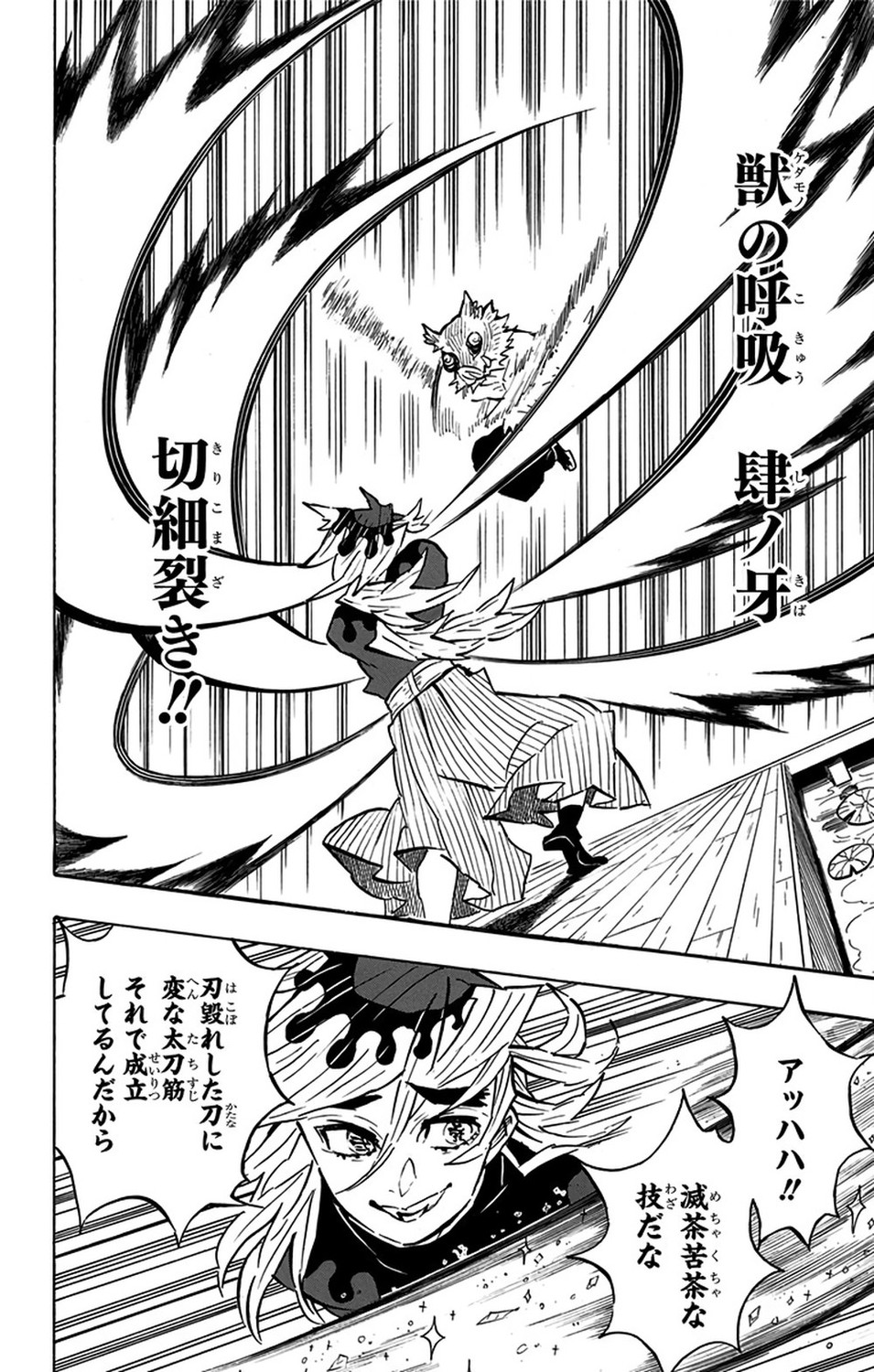
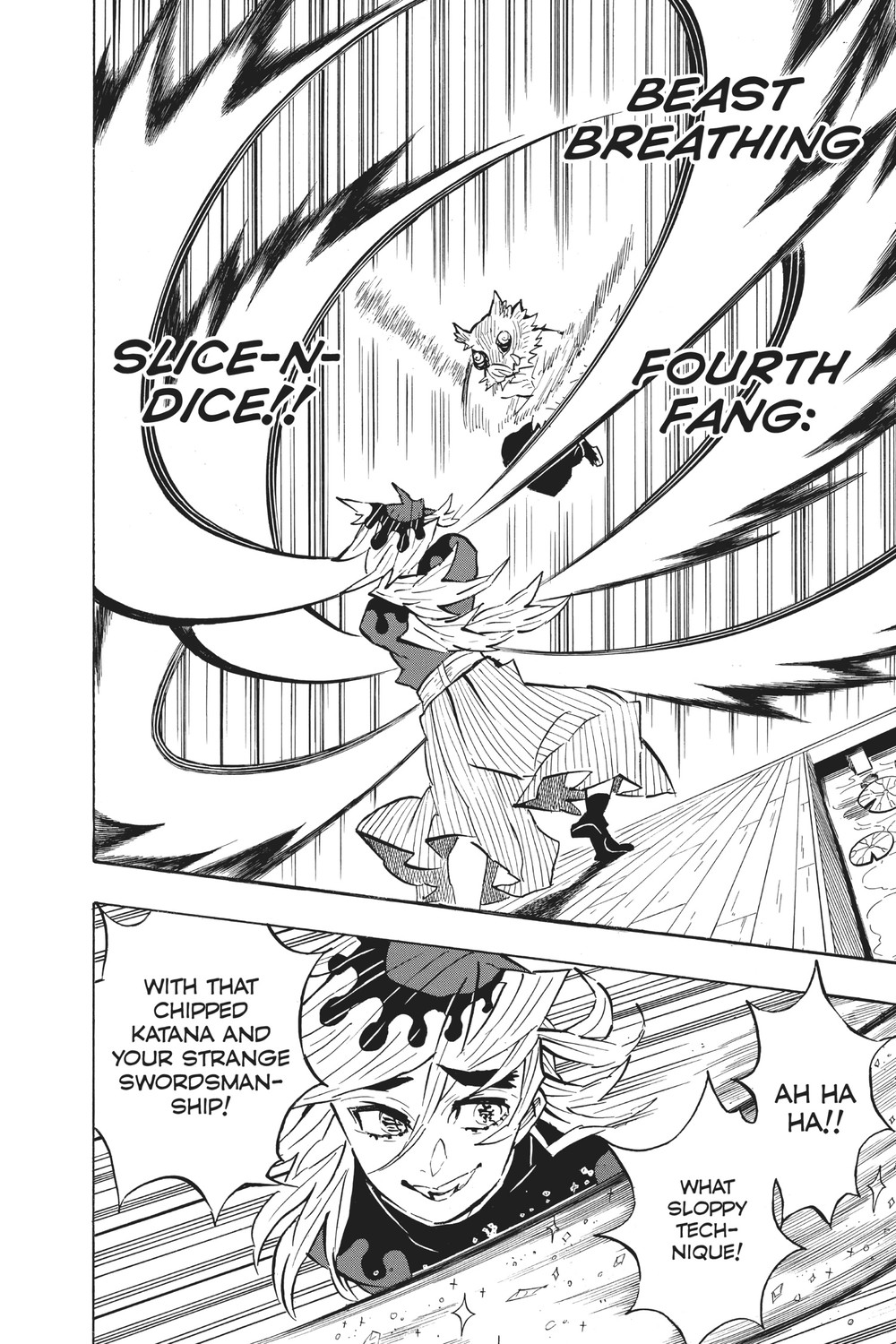
Fourth Fang's Japanese name is built by inserting one extra character into Second Fang's: 切り裂き ("cut-tear," Second Fang) becomes 切細裂き ("cut-fine-tear," Fourth Fang) — the 細 (koma, "fine, minute, shredded") turning a single slash into something closer to mincing. It's a real escalation in the Japanese, the kind of naming logic you'd expect from someone building a technique list by intensifying the moves that came before rather than inventing wholly new verbs each time. VIZ's English translation erases that escalation entirely: both techniques come out as "SLICE 'N' DICE!!," word for word, panel for panel, across four separate confirmed appearances in three different volumes. An English-only reader has no way to know Fourth Fang is even a different move from Second Fang, let alone a deliberately more violent one.
This entry is also a case study in why the visual page, not the corpus's automated English pairing, has to be the last word. This hub's underlying bilingual database pairs one Volume 18 occurrence of 切細裂き with the English string "MINCE 'N' HACK!!" — a plausible-sounding, even rather good, translation for "cut-fine-tear." But the actual printed VIZ page (Vol. 18, correcting for this stretch's one-page pagination offset) shows no such thing: it reads "SLICE-N-DICE!!," identical to every other occurrence. "Mince 'n' Hack" does not appear anywhere in the real book. It's an artifact of this corpus's automatic alignment tooling, not a VIZ translation choice — which is exactly the kind of claim this hub verifies against the source page image before publishing rather than trusting any single database entry at face value.
What's real, and worth sitting with, is that VIZ genuinely does collapse two distinct Japanese fangs into one identical English catchphrase, three times over, across three separate volumes and translation passes. That's not a one-off slip; it's a sustained choice. "Slice 'n' Dice" is punchy and memorable, and reusing it may even read, to an English-only fan, as a deliberate motif — Inosuke's "slicing move," recurring. It just isn't the same move, and the manga's own naming system, however informal, was built to say so.