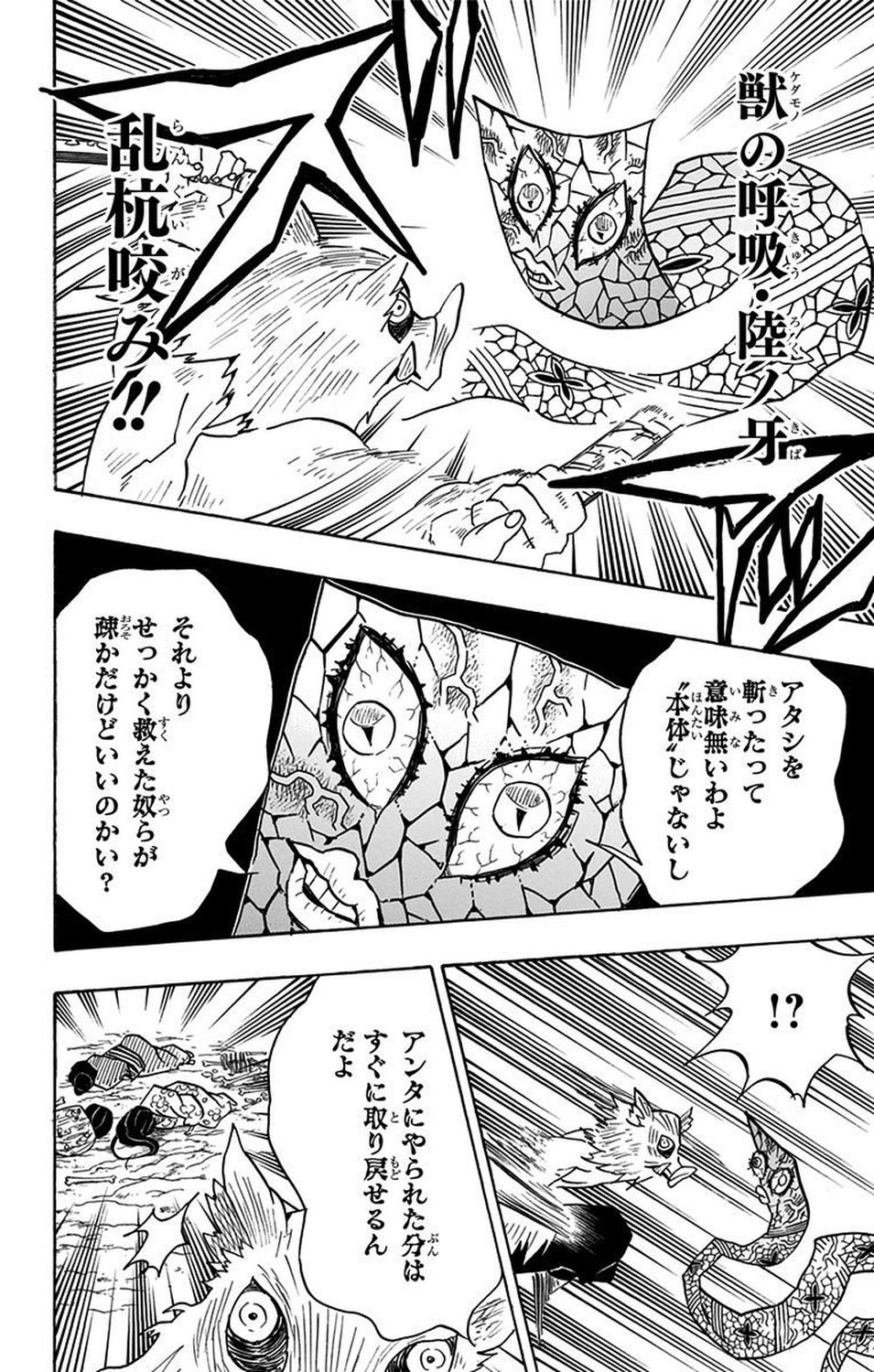
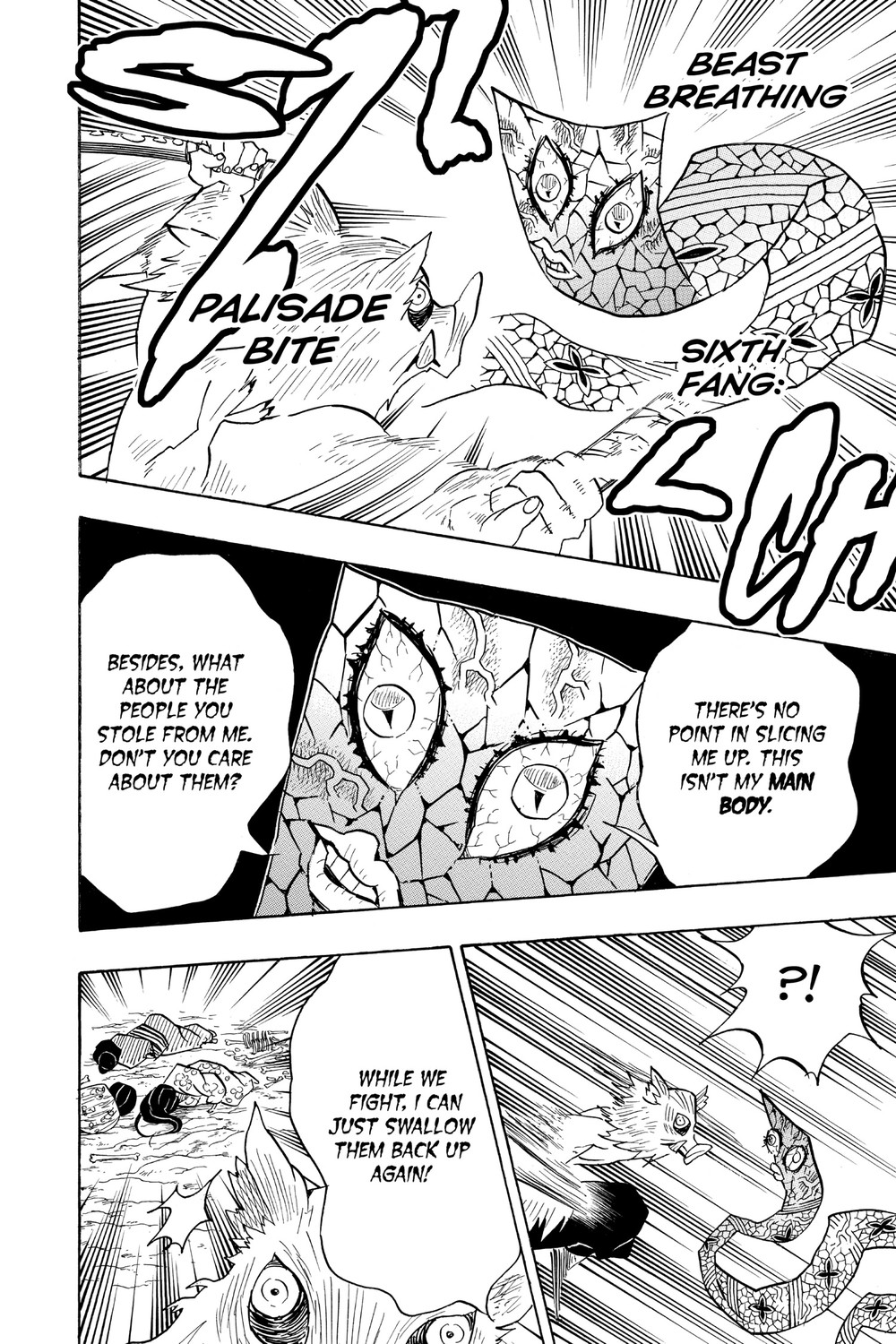
乱杭 isn't a common standalone word — it's a compound built for exactly this technique, evoking a defensive palisade of wooden stakes driven into the ground at uneven, scattered angles rather than in a neat, orderly row. Applied to a sword strike, it describes multiple simultaneous cuts landing at irregular angles and depths, like a body walking into a badly built fence rather than being cut by one clean blade. It's the most structurally specific technique name in the whole style — every other Fang describes a single motion (pierce, slice, devour, frenzy); this one describes a resulting shape.
The closing verb pushes the imagery further. Every other Fang in Beast Breathing ends in 裂き (saki, "tear"), a wound verb. Sixth Fang alone ends in 咬み (kami, "bite") — specifically the character reserved for an animal's bite (a dog's, a wolf's) rather than 噛む, the neutral verb a person uses for chewing food. Where the rest of the style frames Inosuke as a swordsman who happens to fight like an animal, Sixth Fang's name drops the sword-fighting pretense for a paragraph and calls the attack what it visually is: something with a mouthful of teeth doing the damage. VIZ's "Palisade Bite" keeps both halves intact and does real justice to the compound — a rare case in this style where the English translation isn't shorter or blunter than the Japanese original.
This Fang's four separate confirmed appearances, spread across five volumes and three different fights (a monstrous shapeshifting demon, a fellow demon slayer's blade, human-flesh puppets, and Muzan himself), make it Beast Breathing's most-repeated named technique in this corpus — evidence that, whatever its odd construction, it earned a permanent place in Inosuke's working repertoire rather than being a one-fight improvisation.