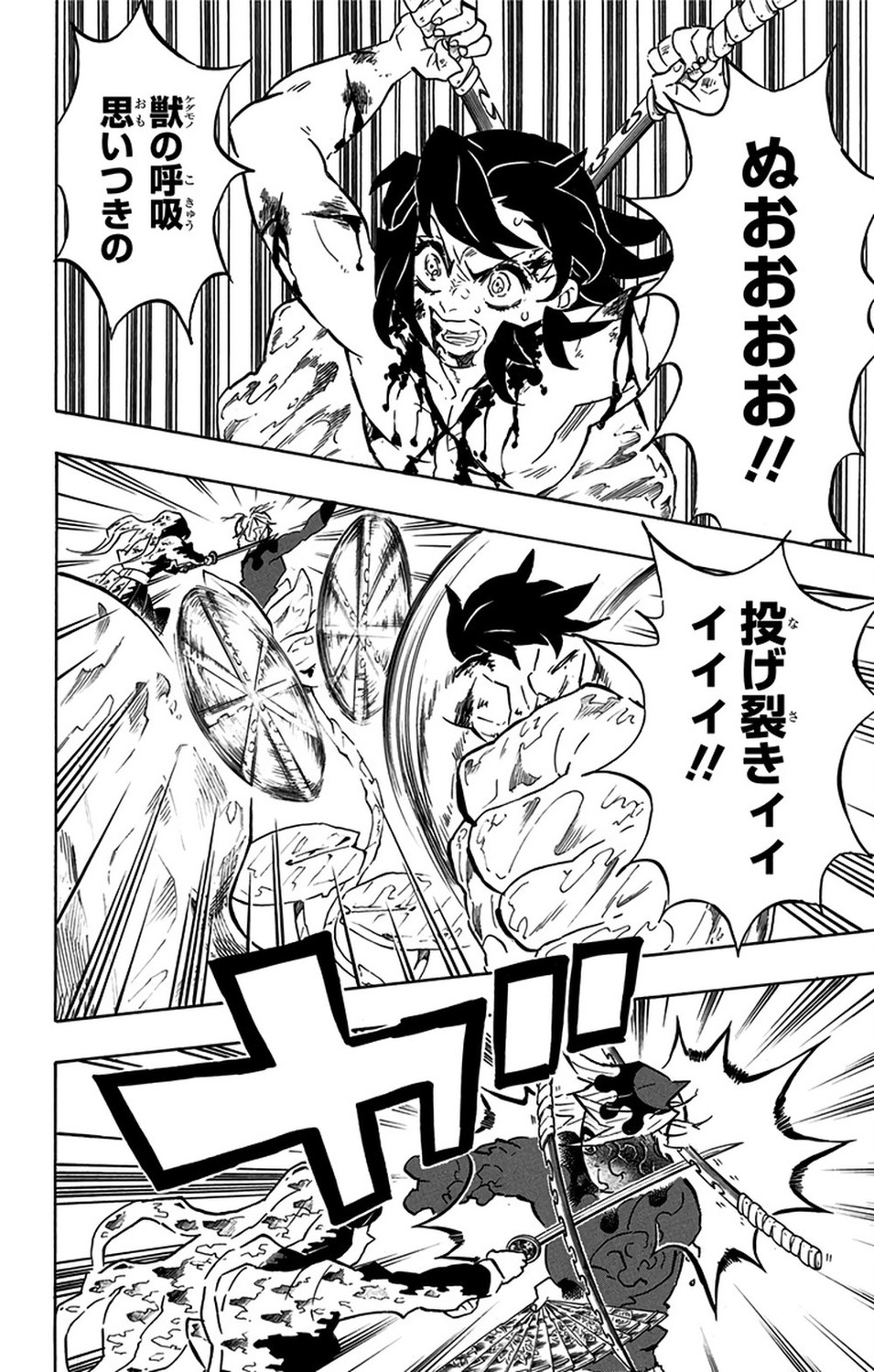
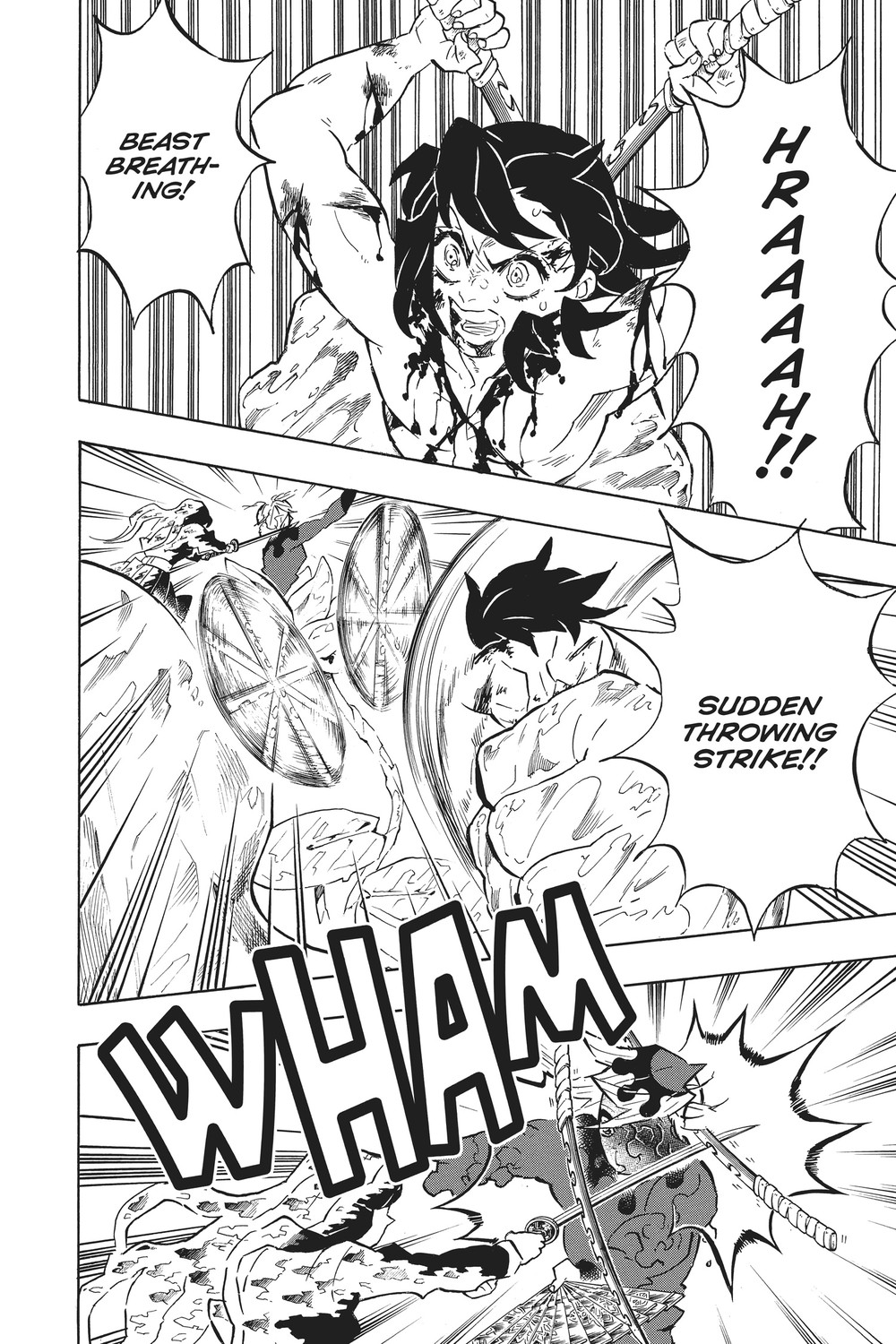
Every other Beast Breathing entry on this hub carries a formal kanji numeral — 壱, 弐, 参, all the way to 玖 (nine) — dressing Inosuke's self-taught fighting style in the same ceremonial numbering real dojos use. This technique pointedly does not. Its name opens with 思いつき, "a sudden idea," the same word you'd use for an impulsive decision to try a new recipe or take an unplanned detour — about as far from martial-arts formality as Japanese vocabulary gets. Where First through Ninth Fang each imply, however falsely, that Inosuke has drilled and refined a fixed repertoire, this move's own name confesses the opposite: he made it up, right there, because throwing the sword solved the immediate problem better than swinging it.
That makes this technique the clearest possible illustration of what "self-taught" actually means in practice, as opposed to what it merely implies. A numbered Fang, however wild its name, still carries the trappings of a system: a slot in a sequence, a formal numeral, implied repeatability. "Improvised throw-slash" carries none of that — it may never be repeated again in the corpus by that name, and its own label tells the reader not to expect it to be. It's the style's built-in reminder that Inosuke's entire arsenal, even the parts that look systematic, was assembled by a boy who fought bears bare-handed and started attaching formal numerals to his instincts well after the instincts already worked.
This entry also required unusually careful page-image verification. This hub's underlying bilingual corpus pairs the Japanese line with mismatched English text drawn from a different panel on a different page entirely — an artifact of automatic cross-page alignment in a stretch of Volume 19 with significant layout differences between the Japanese and English editions. Direct inspection of the correctly-corresponding VIZ page (accounting for this volume's known one-page offset) confirms the real printed callout is "BEAST BREATHING!" / "SUDDEN THROWING STRIKE!!" — not the mismatched line recorded in the underlying database, which is preserved below in this entry's references for transparency but should not be read as VIZ's actual translation of this technique.