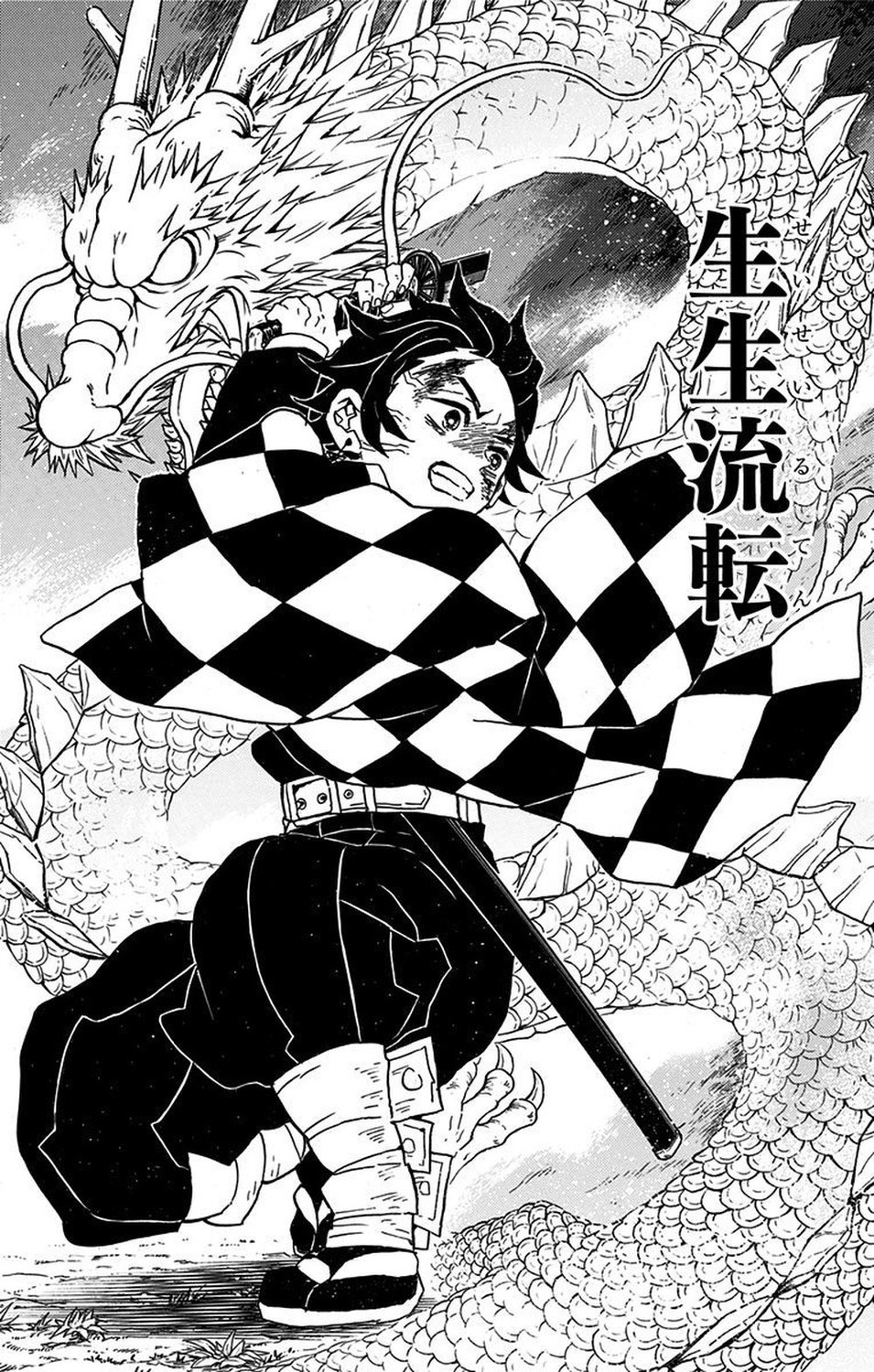
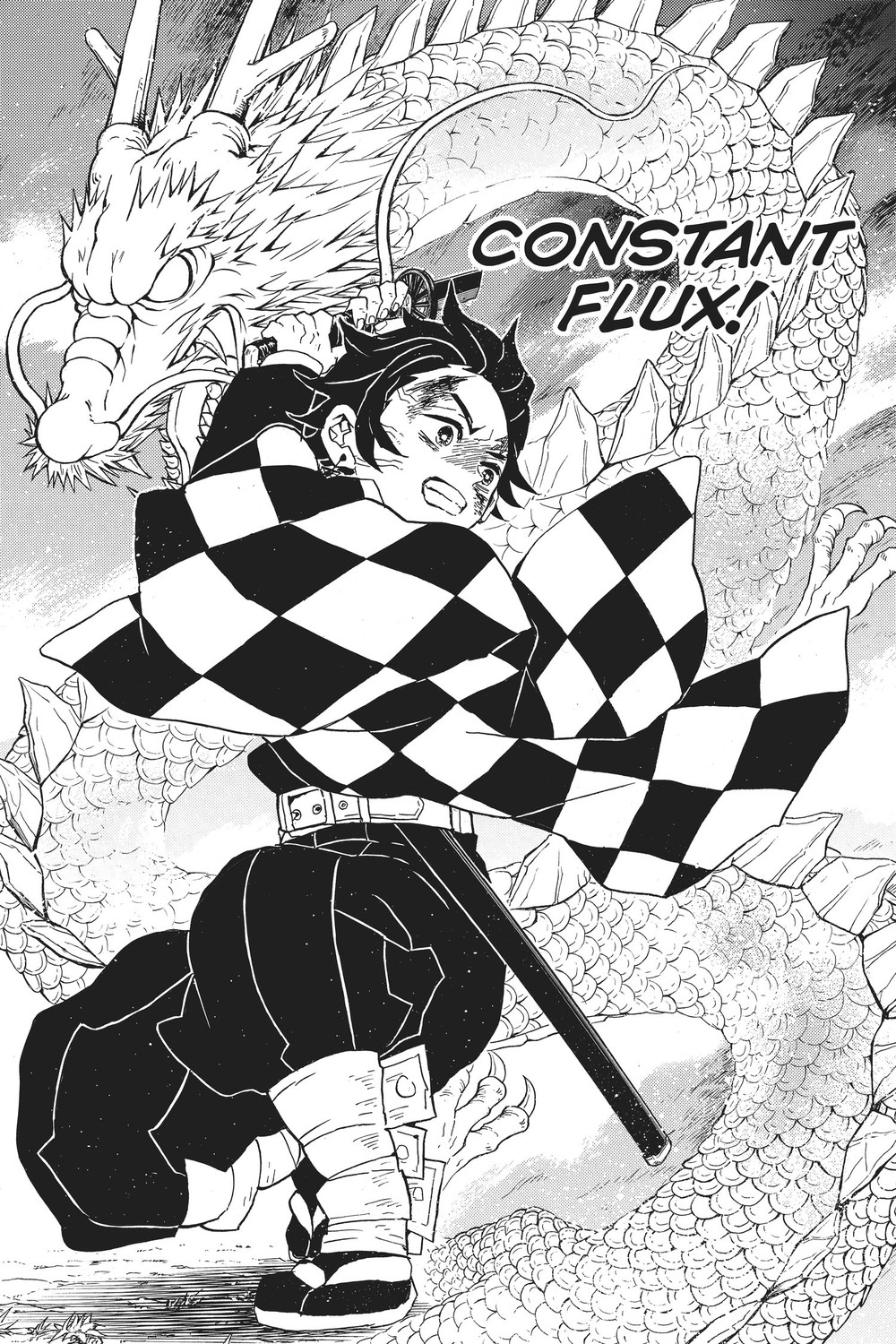
This is the one technique name in the entire dictionary that predates the manga itself: 生々流転 (shoujouruten) is a real yojijukugo describing the Buddhist concept of perpetual change — all life flowing and transforming without end. VIZ's "CONSTANT FLUX" is a clean, secular compression of that idea for an English-speaking audience who may not recognize the idiom, trading the explicit Buddhist framing ("life upon life") for a more physics-flavored phrase. It's a defensible choice for a battle manga, but it does mean English readers miss that the strongest sword form Tanjiro knows is literally named after a philosophical concept about mortality and rebirth — thematically loaded, given how many of the fights this technique appears in end with someone's death.
The corpus confirms this is genuinely treated as the strongest 'basic' form in-story: the panel immediately preceding its Vol. 5 debut has another character instruct Tanjiro, "do the final form, the one with the highest precision," and the visual payoff is a full-page splash of Tanjiro coiled inside an illustrated dragon — the only form in this dictionary rendered with that kind of mythic-creature imagery rather than water/wave effects alone. The dragon isn't a separate blood demon art or spirit animal; it's a visual metaphor for the technique's escalating, twisting momentum (each strike literally described as landing harder than the one before, 'like a twisting dragon that rotates as it moves').
Its recurrence across three widely separated arcs — Mt. Natagumo (Vol. 5), the Mugen Train aftermath (Vol. 7), and the final battle against Muzan (Vol. 23) — makes Constant Flux a rare through-line technique: it's the form the story reaches for at three of Tanjiro's highest-stakes moments, bookending his growth from a boy who has to be told to 'get it right' against a single Lower Rank demon to a swordsman deploying it unprompted against the series' final antagonist.