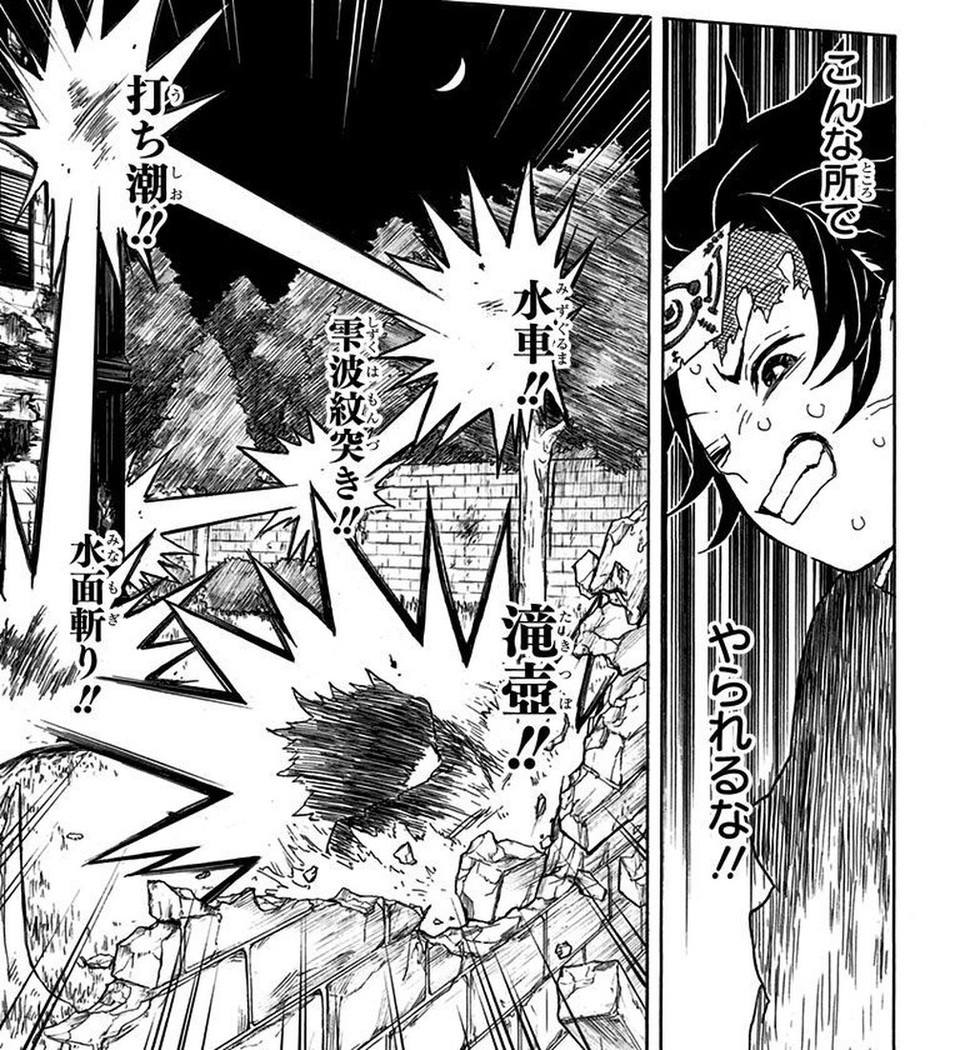
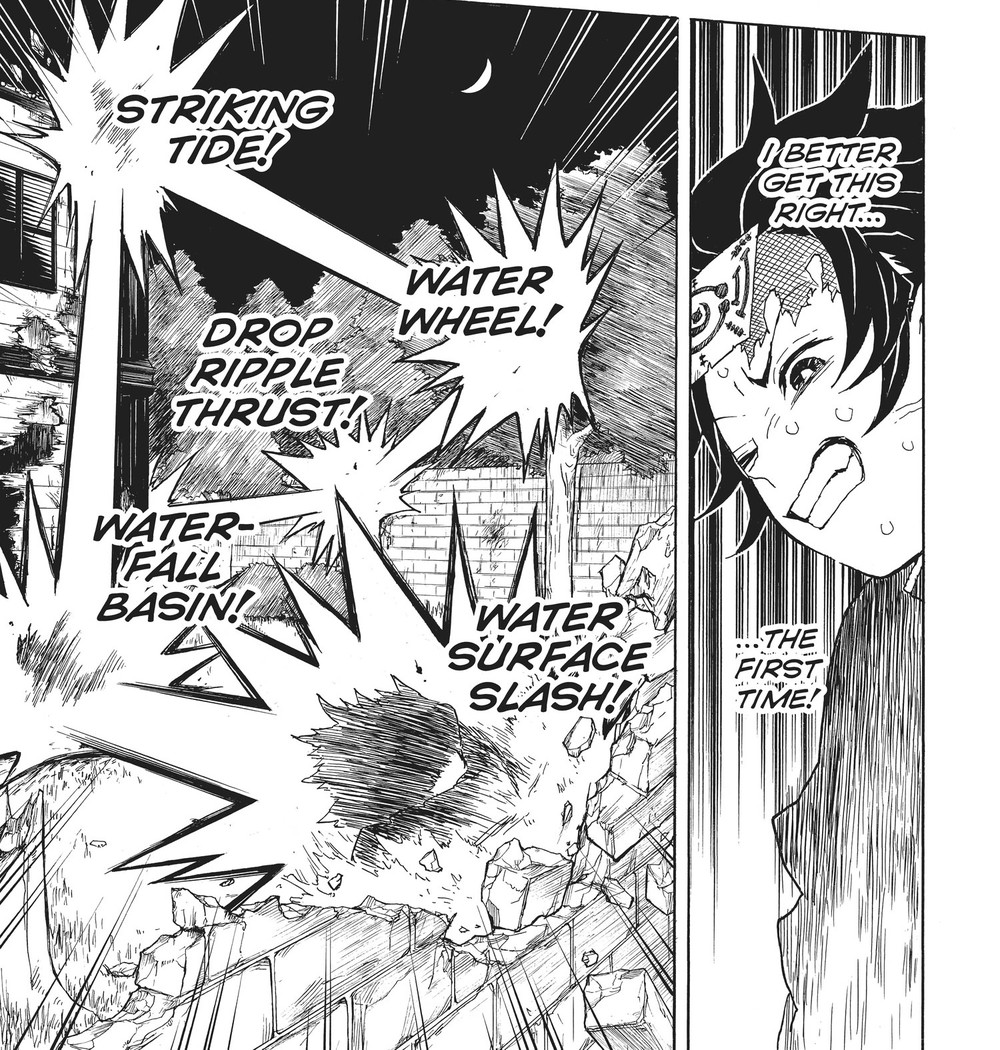
The corpus itself supplies this form's superlative directly: Vol. 2 p.176 narrates, "among the ten forms, the fastest thrusting technique is..." immediately before the name is given — meaning the 'fastest thrust in the style' claim isn't fan trivia, it's text. That single line does a lot of work: it retroactively frames every other numbered form as slower by comparison, and it explains why this specific technique later resurfaces as an offhand unit of measurement (see below) rather than staying confined to combat scenes.
That comparative use shows up explicitly in the corpus: a Vol. 16 aside describing Shinobu Kocho's fighting style states she "doesn't have strong muscles when it comes to swinging her sword... [but] she is amazingly strong at pushing and thrusting, with the power to pierce rock. It's faster than the Water Breathing technique called Drop Ripple Thrust." That's a striking translation-adjacent detail: the manga uses this specific Water Breathing form as the benchmark for describing a completely different swordsman's (Shinobu's own, non-Water Breathing) thrusting speed — treating 雫波紋突き less like a move exclusive to its own style and more like a widely-understood unit of "how fast is fast" within the Corps.
"Drop Ripple Thrust" is a compact, four-word translation of a five-morpheme Japanese compound (雫 + 波紋 + 突き), and it's worth noting what VIZ chose to compress: 波紋 (hamon) alone would normally translate as just "ripple," with 雫 ("droplet") explaining the ripple's cause. VIZ keeps both nouns rather than dropping the cause and just calling it "Ripple Thrust" — a small but meaningful choice, since the visual of a technique named for the widening rings after a single drop lands is core to how the attack is drawn on the page (concentric shock lines expanding from the point of impact).