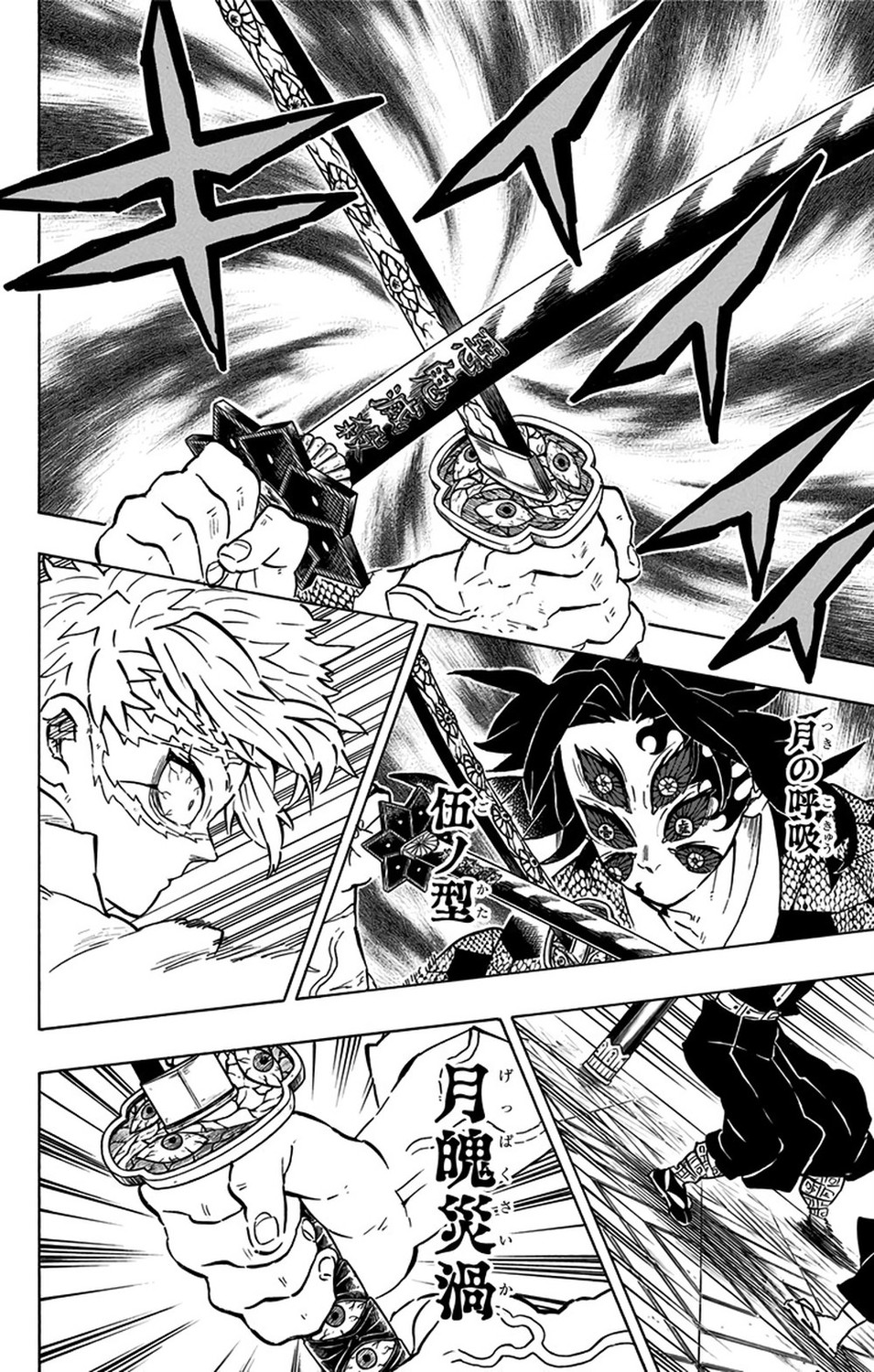
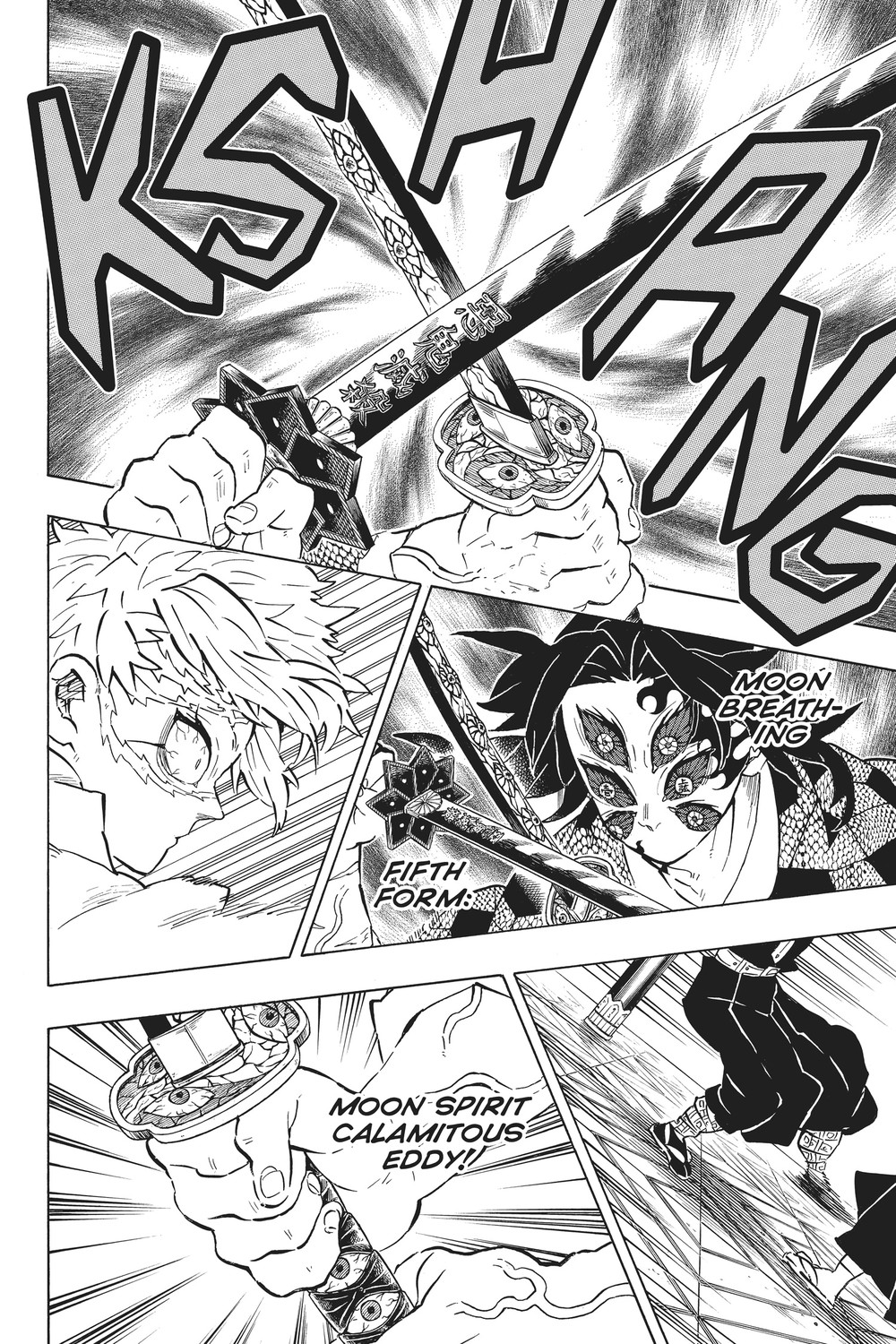
魄 is the sharpest word choice in this entry, and it rewards a moment's linguistics. Classical East Asian thought (inherited into Japanese kanji vocabulary via Chinese cosmology) distinguished two kinds of soul: 魂 (kon), the ethereal, heaven-bound spirit, and 魄 (haku/paku), the earthbound, physical soul tied to the body and its remains — the half of you that lingers near the grave rather than ascending. Naming a technique 月魄 rather than the far more common 月魂 or plain 月 is a deliberate choice: it casts the moon not as a distant light but as something with a body-bound, almost corpse-adjacent presence, which lines up unsettlingly well with a technique wielded by a centuries-old demon who is, by his own admission elsewhere in the corpus, still clinging to a human shape he lost the right to centuries ago.
災渦 finishes the image with pure kinetic violence: 災 is the character for disaster in the abstract (fire, flood, calamity in general), and 渦 is a whirlpool specifically — the compound reads like a weather report for catastrophe, and the panel delivers on it, showing Kokushibo's sword erupting into a full radial spread of simultaneous strikes rather than a single line of attack. Where Forms One through Three lean on stillness and dusk-lit poetry, Form Five is the style's first outright spectacle move — Moon Breathing showing that its vocabulary can escalate to violence as easily as it can linger on twilight.
One alignment note for anyone cross-checking sources: the Japanese page (Vol. 19, p.131) opens a new chapter, and its underlying English-edition counterpart at the same page number is a full-page chapter-break illustration ("CHAPTER 167: A REQUEST") with no combat content at all — a different scene entirely. The real matching VIZ text sits one page later, at p.132, which is the source for this entry's English panel crop; treat any tool that naively pairs Vol. 19 JP p.131 with VIZ EN p.131 as wrong for this specific technique.