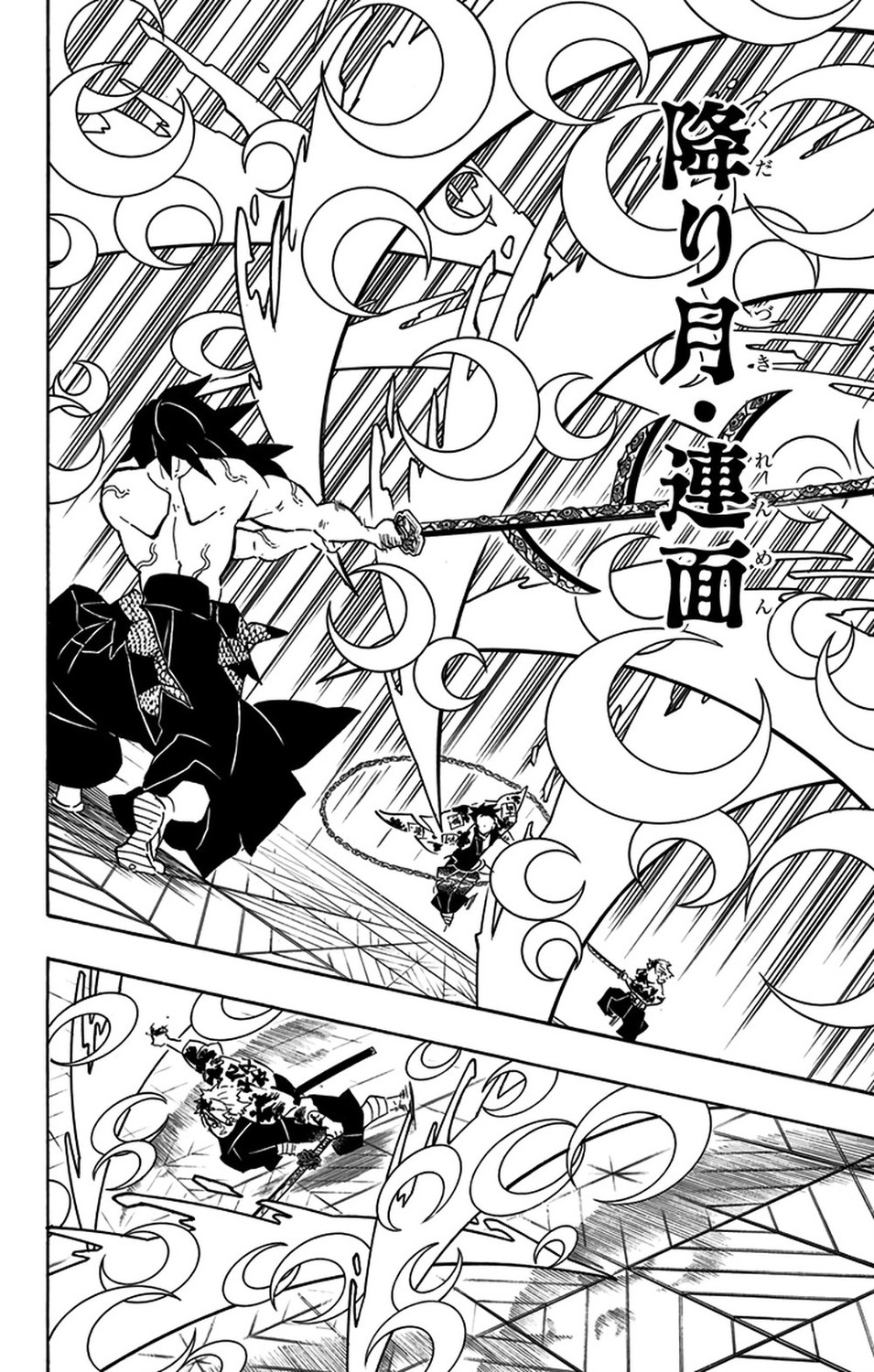
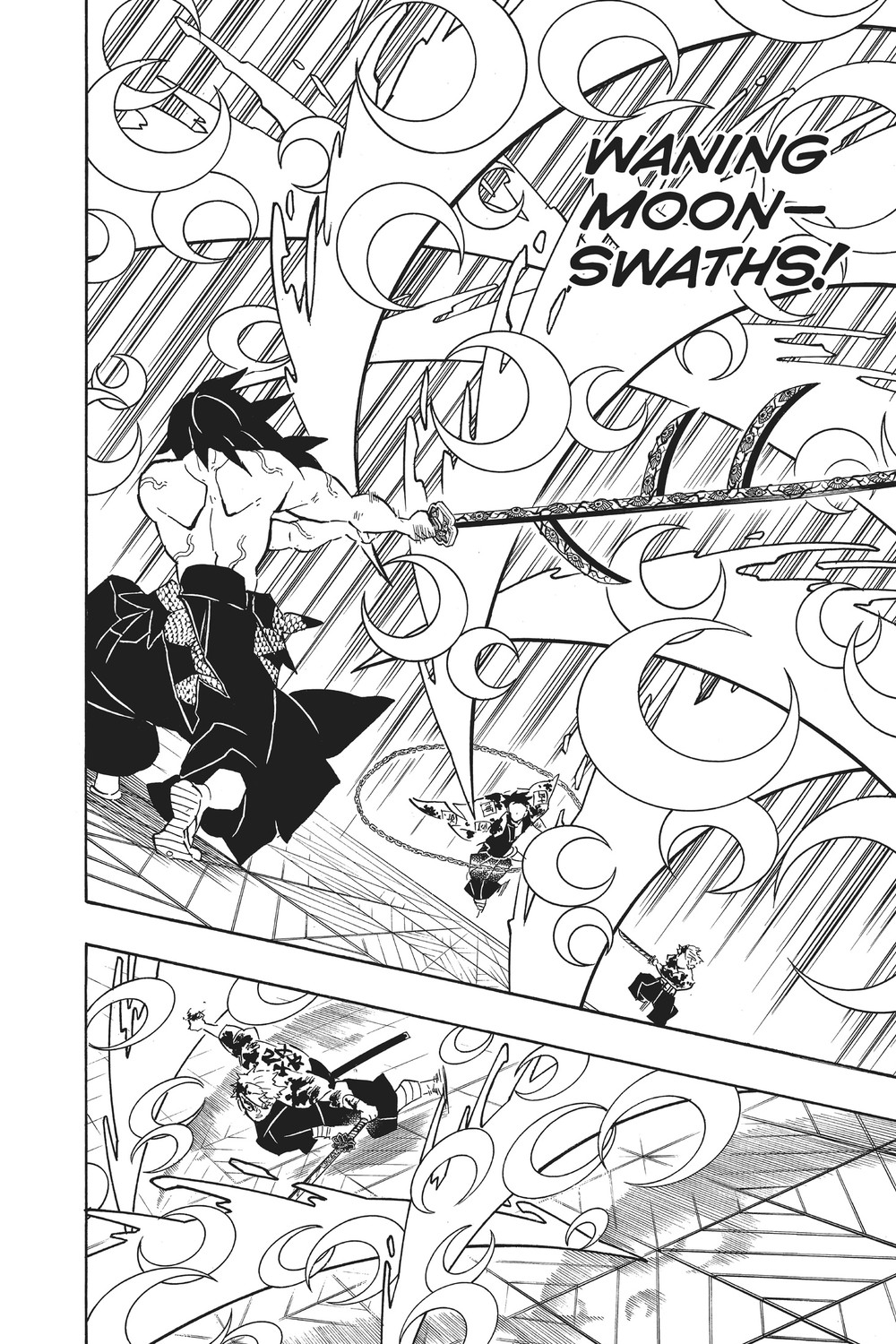
This entry required the closest page-image scrutiny of any Moon Breathing form in this dictionary, and it's the clearest example in the set of the Volume 19-20 alignment trap this hub's underlying corpus is prone to. The bilingual database's own OCR for this pair is severely garbled — it reads the Japanese as "9月・運営" (literally "September, management/operations"), nonsense that bears no resemblance to the actual splash-page kanji. Worse, the corpus's stored English for that same garbled entry is "MOON BREATHING NINTH FORM: DESCENDING MOON PERPETUAL PHASES" — a translation that does NOT match what VIZ actually printed on the corresponding page. Direct inspection of the real English page (accounting for the volume's one-page offset) shows the true splash-panel callout is "WANING MOON-SWATHS!", a completely different rendering. The mismatched corpus text is preserved verbatim in this entry's sources/references below for transparency, but readers should treat "WANING MOON-SWATHS" — confirmed against the actual printed page — as VIZ's real translation, not the phrase stored in the underlying database.
Once the real text is established, the translation choice is interesting on its own terms: "swaths" is doing something "faces" or "phases" wouldn't — a swath is a wide mowed strip, which reframes 連面 ("linked faces/aspects") as linked cutting paths rather than linked lunar phases. It trades literal moon-phase imagery for a harvesting metaphor that better matches what the technique actually looks like on the page: parallel crescent gashes torn across the panel like a scythe through tall grass.
降り月 ("descending/setting moon") slots into the same classical-poetry register as this hub's other Moon Breathing names — 入り月 and its cousins were genuine terms in Heian-era waka for the moon in its last hours before dawn, carrying connotations of transience and an ending that's beautiful precisely because it's brief. That a technique named for the moon's decline shows up here, in the middle of Kokushibo's final battle against four Hashira at once, is the kind of naming-as-foreshadowing Gotouge does more than once with this style — four hundred years of refinement, arriving at a fight this is measurably the end of.